Showing posts with label Australia. Show all posts

Monday, January 6, 2020

PM: Marape Conveys sympathies to Australia Bushfires Disaster

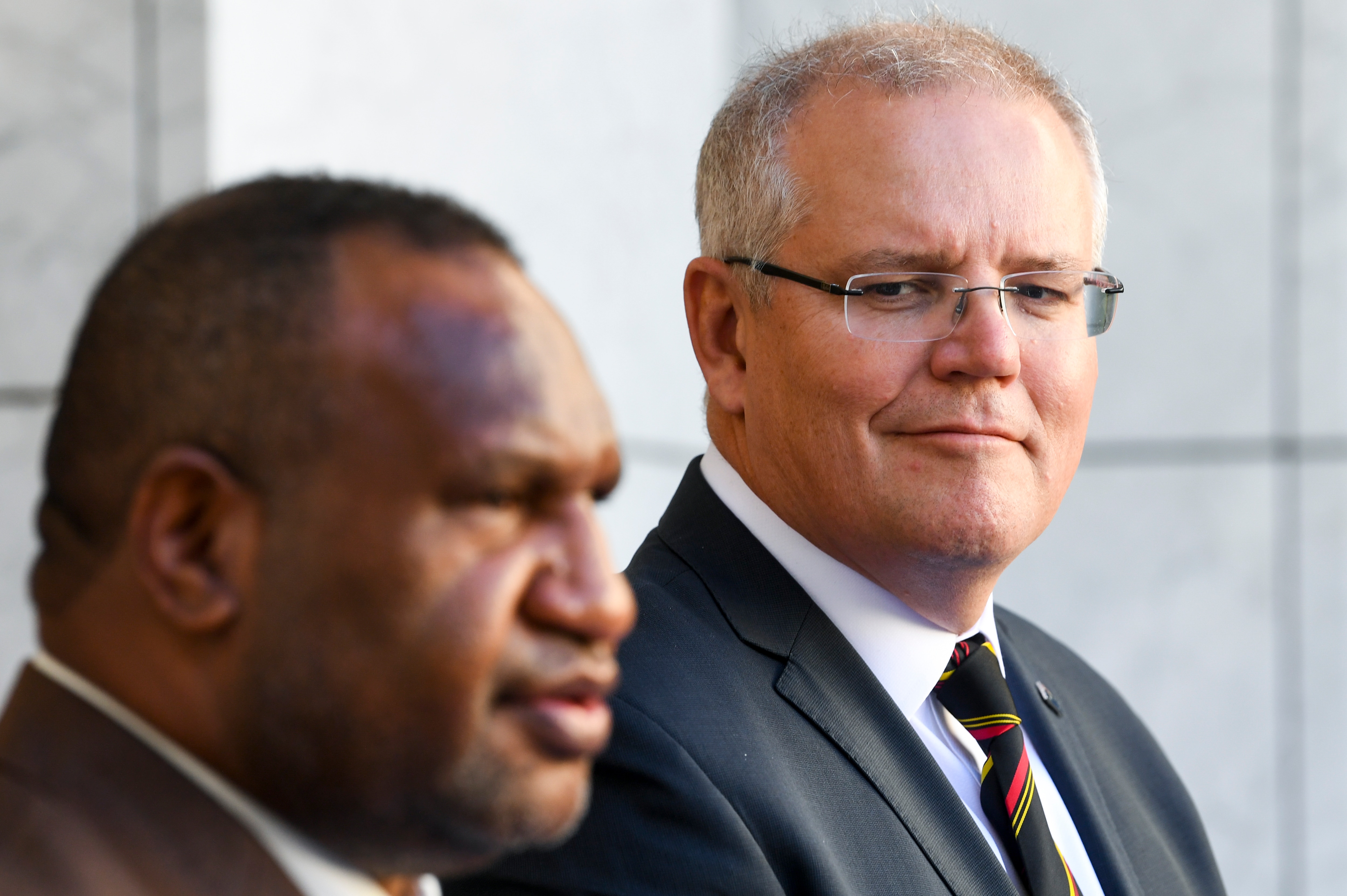
Image result for Morrison and Marape

By Prime Minister James Marape

To family and loved ones of victims of the fire tragedies in Australia , to the greater Australian people and Prime Minister Scott Morrison, Papua New Guinea convey our sympathies, sorrow and grief in your moment of pain.
Australia is the closest friend of PNG and is always the first in PNG in our times of adversities and we offer our hearts and our hands to you in this time of fire induced tragedies.
PM Morrison and myself have been in constant conversation the last few weeks and if need be, 1000 of our combine soldiers and fire fighters stand ready to be deployed to give a hand upon PM Morrison's invitation.
I also convey to Australian people that many PNGeans on their own free will are doing fundraising and offering prayers for Australia since the disaster first started.
It shows we are with you in thoughts and prayers.
May the God Yahweh of PNG and Australia contain this adversity! In 1 Corinthians 10:13, God promises that in all problems /temptations there is an escape route for those who call upon God’s name.
I believe in that and PNG prays that consolation to our friends in Australia.
With sincere love and sympathy,
Hon James Marape
Prime Minister of Papau New Guinea
On behalf of the people of PNG

Tuesday, July 30, 2019

PM returns from Australia: This is the start of a new relationship


Posted on The National

PRIME Minister James Marape has described his first official state visit to Australia as a successful one.
Marape, who arrived from Australia yesterday afternoon, said the people and the government of Australia received the PNG state delegation well.
He said PNG and Australia shared a border and a shared history.
He said with the dormant policy of “Friends to all – enemy to none”, Australia remained PNG’s closest friends and number one bilateral partner in terms of government to government and people to people exchanges.
Marape said in that regard, Prime Minister Scott Morrison invited him to visit Australia.
He said the gesture was the start of a new relationship that was expected to see the way minister to minister exchanges and those among government officials.
He said those meetings would elevate relations between the countries in the 21st Century to an improved state across a wide range of areas particularly, trade.
He said there was a trade imbalance between the two countries with Australia extracting more benefits than PNG.
That fact was discussed during the visit with the aim to have a comprehensive strategic economic partnership.
Marape said the framework entailed how the two economies could work together to address and allow for free trade including, labour mobility.
He said in terms of labour mobility, instead of sessional fruit picking, they had discussed how Australia could look at investing in the technical vocation education to equip people to participate in skills schemes.
Marape said he and Morrison had several discussions based on key achievable outcomes.
He said their meeting would set the basis for the minister to minister meeting to be hosted in Aug this year.
He said the Manus detention centre and asylum seekers and the naval base was among the issues discussed with Manus Governor Charlie Benjamin.
The discussions also involved making travel easier between the two countries.

Go to this link for more: https://www.thenational.com.pg/pm-returns-from-australia-this-is-the-start-of-a-new-relationship/


Sunday, July 28, 2019

PNG PM vows to improve his citizens' access to Australian visas


BY BRETT MASON & ROSEMARY BOLGER - SBS News

Papua New Guineans will be able to travel to Australia more easily under changes being pursued by Prime Minister James Marape. 
Speaking in Sydney, Mr Marape told SBS News he was determined to resolve ongoing issues making it difficult for PNG residents to access Australia. 
"It's a work in progress, but it's something that I want to achieve in my time in office - better access by Papua New Guinea into Australia in a modernised system where immigration is easily managed." 
PNG may be Australia's closest neighbour, but concerns about the country's border security management have created headaches for residents trying to get visas. 
Mr Marape said he understands Australia's "insecurities" and has vowed to strengthen their border security management system. 
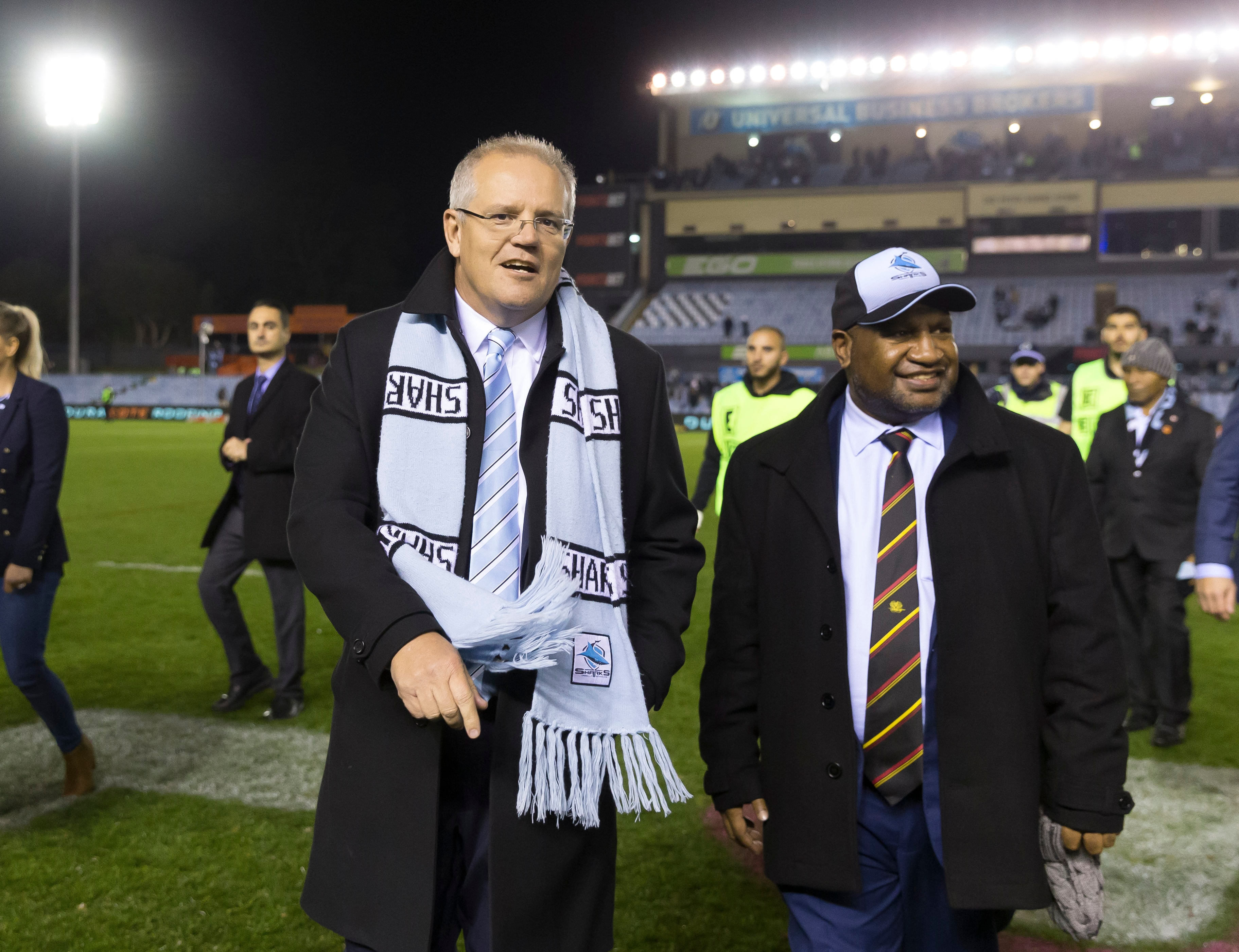
Prime Minister Scott Morrison with Papua New Guinea Prime Minister James Marape on Thursday night.
AAP
In a wide-ranging interview with SBS News on Friday, the PNG prime minister declared his week-long trip to Australia a success. 
"Both prime ministers have agreed it's no longer an aid-donor recipient relationship, it's now about economic relationships where Australia sees PNG as an important trade and economic partner and for PNG, we can see Australia as a great market place for our local produce." 
Having built his country into "the richest black Christian nation on the face of planet earth", Mr Marape has declared PNG will not need Australian aid for long. 
"Ten years from now I would like PNG to be elevated to a status of economically sound and strong. Where we're able to help Australia assist in the Pacific region.
"We can only do that by when we are economically strong and resilient and independent ourselves."
After spending Thursday night at a rugby league game with Mr Morrison, Mr Marape praised his Australian counterpart's "human touch". 
"We entered politics at the same time in 2007... by the grace of God, he has become PM in the Australia side and I have become PM in the PNG side."
Prime Minister Scott Morrison and his PNG counterpart James Marape discussed the future of Manus Island in Canberra on Monday.
AAP
But there are key issues where the two disagree. Mr Marape has demanded an end to offshore processing on Manus Island where about 350 asylum seekers and refugees have spent up to six years.
Mr Morrison would not set a date for the closure of Australian-run detention facilities, but has agreed to work out a schedule.  
Action on climate change - the biggest threat facing Pacific nations - is another source of tension. 
While Mr Marape said it was not his position to tell Australia what to do, he suggested Australia consider its role in the region. 
"I think our combined voice of global states is important. Australia needs to unite behind the entire Pacific group of nations."
Go to this link for more: https://www.sbs.com.au/news/png-pm-vows-to-improve-his-citizens-access-to-australian-visas?fbclid=IwAR0_gTuiHyjeOOCgbRrppGM1imMddDmAVdsobrzdh1pi6mPgPz9Vlw-_pqk

Friday, July 26, 2019

Papua New Guinea will not be dependent on Australia in 10 years, new PM says


By Kate Lyons and Helen Davidson - The Guardian

Papua New Guinea will be free of its dependence on Australian aid within a decade, the new prime minister, James Marape, has said in Sydney.

He said the first 44 years of PNG as a modern nation had been “filled with so many wasted opportunities and failures”, and pledged “regime shifts” in the resource industry to bring more wealth to the people.

Marape made the comments on Thursday in an address to the Lowy Institute as part of his official visit to Australia.

“We welcome every support Australia can give, but in 10 years’ time I want to assist Australia helping the rest of the Pacific,” he said. “We want to be participating with Australia looking after smaller island nations.”

In 2019-20, Australia will give an estimated $607.5m to PNG in development assistance.

Marape was recently appointed as prime minister of the Pacific nation after several months of political chaos which resulted in the ousting of his predecessor, Peter O’Neill, whose tenure was marked by numerous scandals including the controversial UBS deal.

Marape spoke of his dreams for PNG to become the “richest black Christian nation on earth”, and welcomed Australia’s commitment to infrastructure support and social partnerships over the nation’s history.

“But I don’t envisage this type of aid donor-recipient relationship to last,” he told the sold-out event, which the head of the Lowy Institute, Michael Fullilove, said had drawn more media interest than any event since the institute hosted Boris Johnson in 2017.

“We will move from an introduced culture of dependency and complacency, where we rely on overseas aid and inward investment alone, to one where we become a vibrant economic powerhouse and are totally economically independent by expansion and diversification of our economic base.”

Marape said PNG had to tweak its resource laws and institutions to bring its share of taxes, equity and royalties to above 50%. Major resource projects have routinely been accused of bringing wealth inequality and sparking major disputes.

“[O]ur people demand change of course for the better because what we have done thus far as a nation has been inequitable and disproportionate to our natural resource extraction.”

Go to this link for more: https://www.theguardian.com/world/2019/jul/26/papua-new-guinea-will-not-be-dependent-on-australia-in-10-years-new-pm-says?CMP=share_btn_fb&fbclid=IwAR2ibgcm4HFG8GGF0jFZZsOyDHFYJH964NwTwd-CiZn_wK65xtLPrpZIdPs

PNG won’t be economically dependent on Australia in a decade, PM vows


Posted on SBS News

Papua New Guinea Prime Minister James Marape says he wants his nation to move away from an "aid-donor" relationship with Australia.
"I don't envisage this type of aid donor, recipient relationship to last, in fact within the next 10 years I want my country to grow into economic self-reliance and independence," Mr Marape said during a speech in Sydney on Thursday night.
PNG receives more than half a billion dollars in aid from Australia each year.
Mr Marape's speech comes days after Australia's Prime Minister Scott Morrison announced another $250 million in grants and low-interest loans to help PNG connect 70 per cent of its country to electricity by 2030.
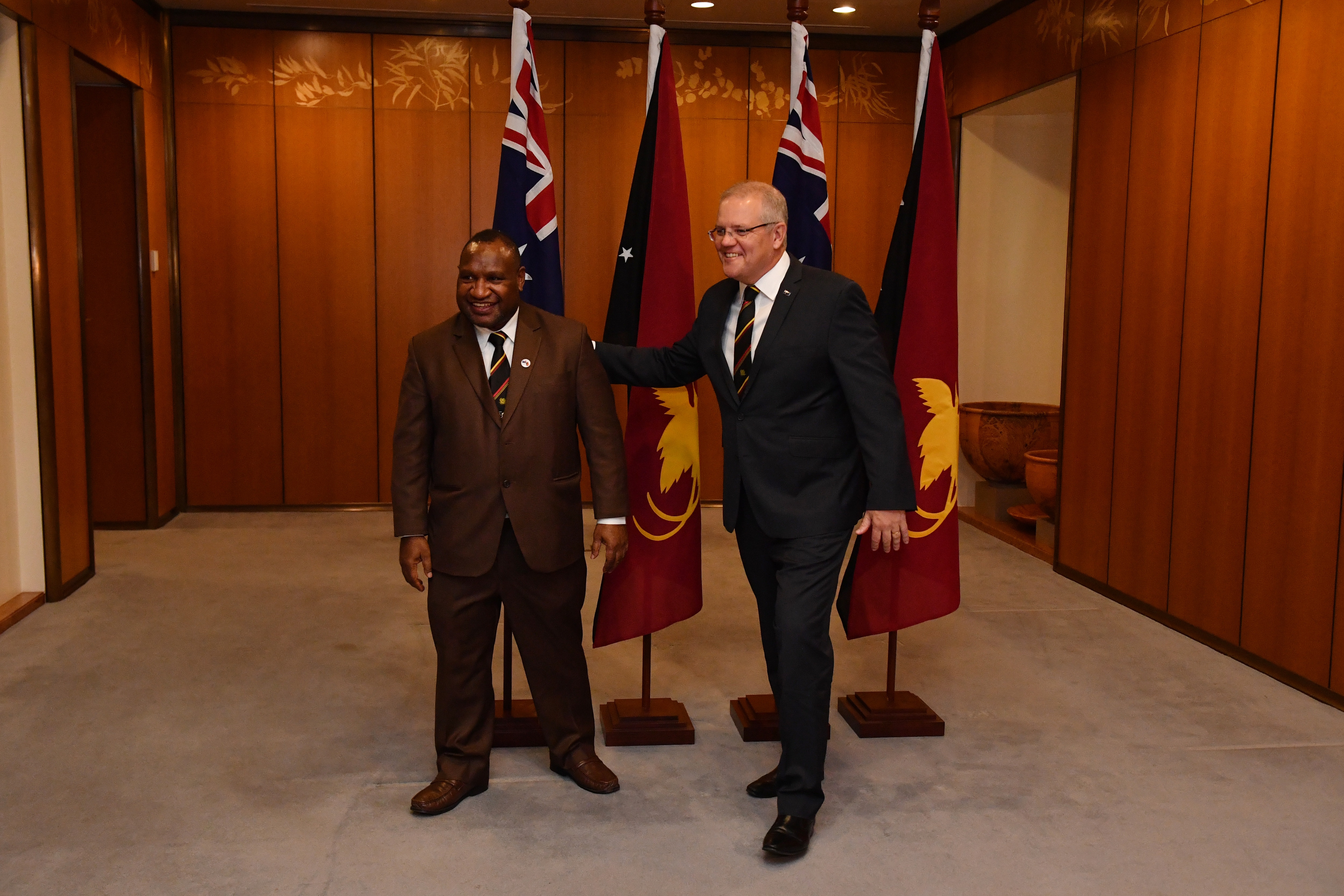
Prime Minister Scott Morrison and Papua New Guinea's Prime Minister James Marape at Parliament House in Canberra, Monday, July 22, 2019. (AAP Image/Mick Tsikas) NO ARCHIVING
Prime Minister Scott Morrison and Papua New Guinea's Prime Minister James Marape at Parliament House in Canberra.
AAP
The new PNG prime minister arrived in Australia on Sunday for a six-day visit after taking over from Peter O'Neill in May.
During Thursday's speech in Sydney, Mr Marape reiterated his pledge to make PNG the world's "richest black Christian nation".
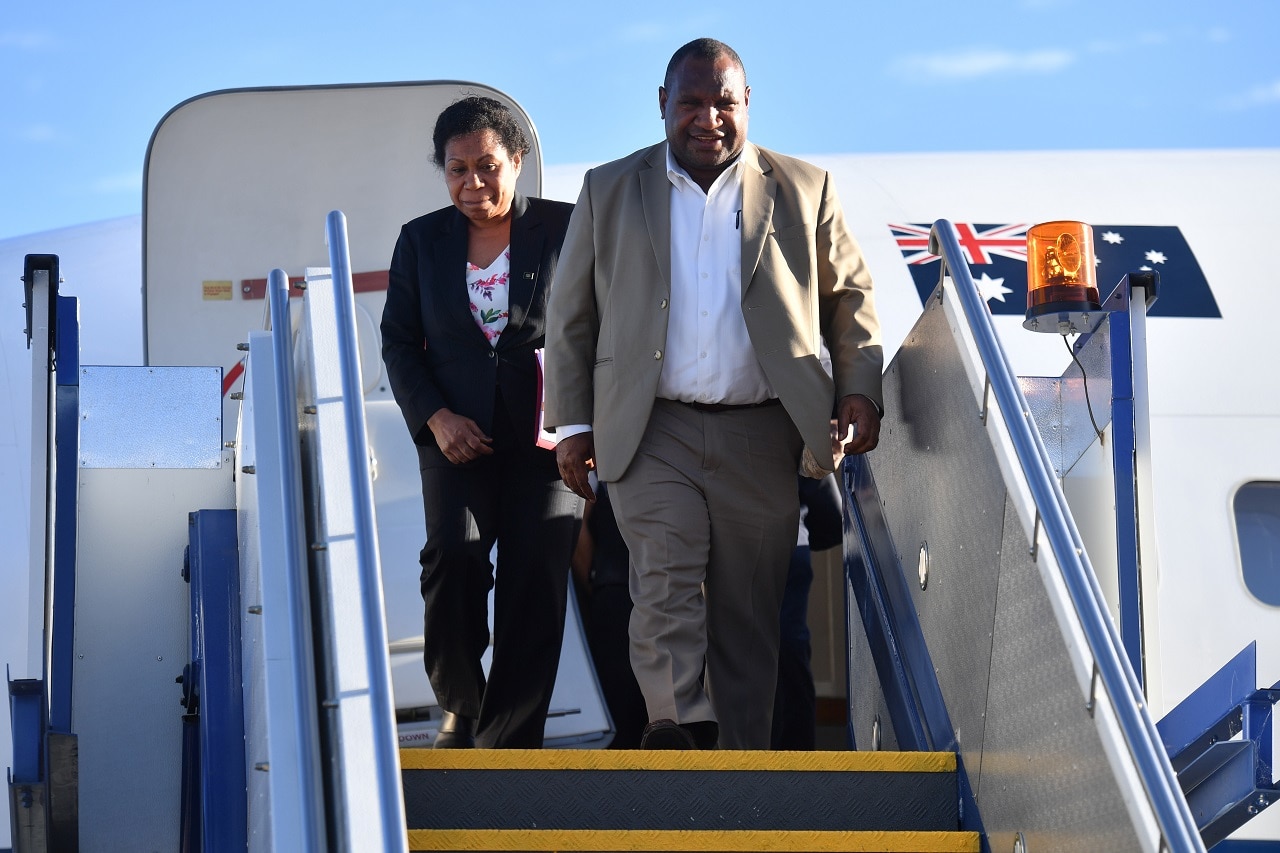
Papua New Guinea's Prime Minister James Marape and wife Rachel Marape arrive at Canberra.
AAP
"For too long we have allowed external forces to dictate the direction that we take, but this will now change," he said.
"We will move from an introduced culture of dependency and complacency, where we rely on overseas aid and inward investment alone, to one where we become a vibrant economic powerhouse and are totally economically independent."

Thursday, July 25, 2019

Australia to give K597mil for electrification programme


Posted on The National

AUSTRALIAN Prime Minister Scott Morrison, pictured, has announced a K597 million investment into the Papua New Guinea electrification programme to support electricity generation in the Ramu grid.
Morrison made the announcement during his meeting with Prime Minister James Marape on Monday, the first of his five-day state visit to Australia this week.
“Today we’ve made some important agreements to elevate our relationship into comprehensive strategic and economic partnership,” Morrison said. “There is an economic relationship that’s about enabling the joint prosperity of both of our countries, and supporting and enabling the health and wellbeing and education of our citizens.
“This is a relationship that is tackling and addressing the security challenges that we face together and we work in addressing and through programmes like the secondary school programmes and church programmes and broader part of the Pacific step up programme,” Morrison said.
The other announcement included the Enga electrification programme which was part of the broader relationship with the United States, Japan and New Zealand in supporting what was a transformational project for PNG combined with the Coral Sea cable project.
Morrison also announced the K129 million for the rural primary health services initiatives and another project of K24 million for the immunisation programme covering about 400,000 children across 12 provinces. He said Australia was also continuing its support of K35 million ($15m) for the next phase of controlling the drug resistance Tuberculosis programme.
“There is also the Defence partnership which is celebrating 40 years and working together in the PNG initiative in Lombrum in Manus is an important part of what Australia is doing in the region and we than asked Papua New Guinea for the invitation to join them in that facility together with the United States.

Go to this link for more: https://www.thenational.com.pg/australia-to-give-k597mil-for-electrification-programme/

Wednesday, July 24, 2019

Flying the PNG flag in Canberra


By Michelle Nayahamui Rooney - DevPolicy Blog

On Sunday 22 July 2019 the Papua New Guinean community in Canberra, Queanbeyan and nearby New South Wales were treated to a poignant and powerful informal gathering with the visiting Papua New Guinea (PNG) Prime Minister, Honourable James Marape, his wife, Rachael, and his delegation of ministers and senior bureaucrats. Although small, the PNG community comprises several hundred long term residents, and a transient group of students, defence force personnel, bureaucrats on attachments, and visiting dignitaries and our families.
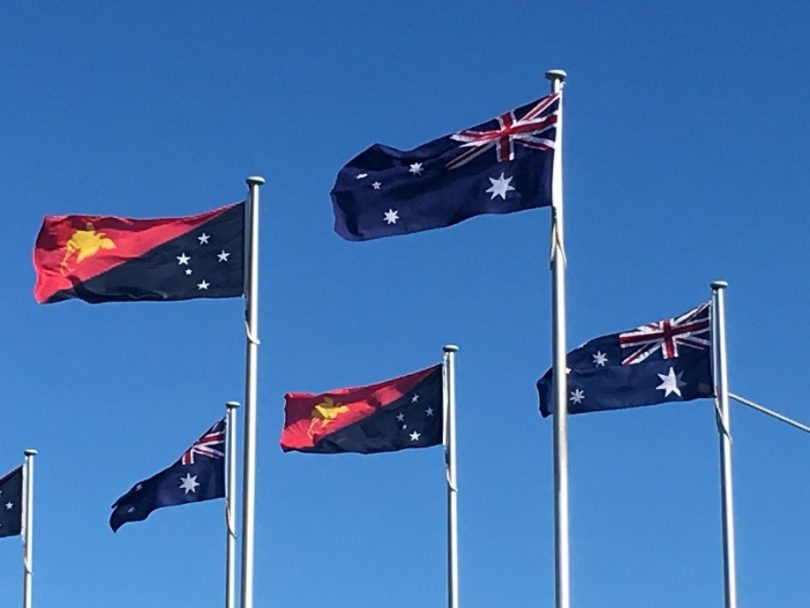
One topic that featured in several conversations I had was the thrilling rare sight of the Papua New Guinean and Australian flags fluttering alongside each other on either end of the Commonwealth Bridge, set against the Australian Parliament House in the background. The gathering, like the fluttering flags, invoked sentiments of national pride, reflections of what it means to be Papua New Guinean living in Australia, and was infused with symbolism reflecting the deep and ambivalent historical and contemporary relationship between PNG and Australia.
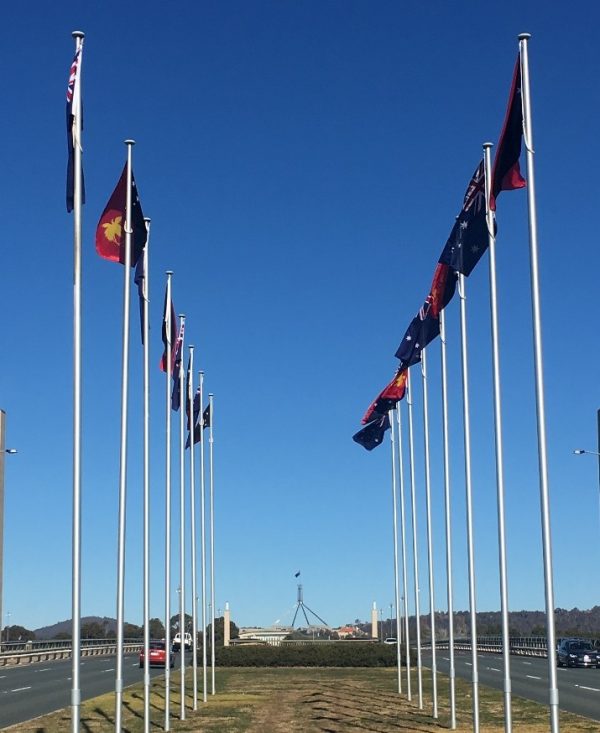
PNG flags fly at Commonwealth Bridge, Canberra (Credit: Michelle Rooney)The Prime Minister and his delegation arrived quietly without any fanfare and joined the community. The proceedings were informal and commenced with the national anthem symbolising 1975 as the point in history at which PNG was granted independence from its colonial administrator, Australia, and came into existence as a contemporary nation state.
Reflecting the, less prideful, deep colonial and mission history, and the precolonial history, the Canberra Peroveta choir, led by community spokesperson, Mr Deveni Temu, welcomed the visiting dignitaries with the Motuan hymn, Sivarai Namo – Good News. It was explained that the hymn speaks about the hoisting of the flag of Christianity to enlighten the world. These hymns were introduced into the local vernacular in the late 1880s during the time of the early colonial and missionary encounters along the Papuan Coastline. Parallel to the missionisation process, in 1884 the British government hoisted the British flag in Port Moresby and proclaimed the territory as a protectorate of the British Empire.
With these national and historical pieces framing the occasion, the tone shifted towards the present and the future as Prime Minister Marape took the floor to address the audience of Papua New Guineans living abroad. He noted that the change in leadership we witnessed earlier on in the year marked a generational shift – a changing of the guard – from the older generation to the younger generation. He referenced his vision of the future PNG to the fiftieth anniversary of the landing on the moon; reflecting on human progress and how dreams come into reality.
Some themes in his speech resonate with the official government to government joint media statements, while other themes were more nuanced towards a Papua New Guinean audience living in diaspora and engaged internationally.
He stressed unity by acknowledging that despite being one the most culturally, linguistically and bio diverse countries in the world, one of PNG’s greatest achievements was that after 44 years of national independence, the country could still sing one national anthem and fly one national flag. He noted that on this front, PNG has flown her flag very high. He was circumspect though, noting that the imminent Bougainville referendum will test that unity and diversity and that leaders will need to handle this in a diligent manner to maintain harmony and unity.
Mr Marape emphasised a reframing of the narrative in PNG’s self-representation by clarifying that, for his government, the phrase, ‘take back PNG’ was about shifting from the negativity and pessimism that dominates portrayals of PNG towards progress and optimism. He also clarified that in the phrase the ‘richest black nation on earth’ he uses the term ‘black’ to connote the contemporary struggles facing PNG and the phrase is about envisioning a better future for PNG.
He made it clear that while PNG’s dominant foreign policy position is ‘friends to all and enemies to none’, PNG has always been a friend to Australia. However, he made it clear that his mission, at the invitation of his Australian counterpart, would be focussed on negotiating PNG’s agenda.
Although he did not discuss any specific concrete policies or plans, he announced that his government was in the process of undertaking consultations and would launch its blue print to achieve the vision of being the richest black nation on the planet within ten years on 16 September, PNG’s Independence Day. In line with some of the official statements he made, some issues he touched on included turning PNG into a food basket for Asia. This includes becoming a rice sufficient nation. He spoke about the review of the extractive industry sector. He also framed his leadership within Christian principles that bind the diverse nation together.
He encouraged Papua New Guineans living abroad to engage with his government and with home, thus signalling that he values both the government to government level relationships but also the many people to people relationships. He invited Papua New Guineans living abroad to think about taking up dual citizenship under the dual citizenship laws passed by the PNG government. He welcomed likeminded thinkers to engage back home.
What he did not say was also important. Mr Marape did not mention issues like the presence of China in the region or border polices that have shaped PNG’s hosting of the Australian off shore processing centre on Manus. He did not mention the most pressing issue of violence against women, or any women’s empowerment issue for that matter. Neither did he mention if the richest black nation would be equitable and fair and based on democratic principles and the rule of the law. Perhaps these details will come out in the blue print.
At face value, the visit seems symbolic of a shift in the bilateral partnership between the two countries and an opportunity for both leaders, as newcomers to their respective positions in relation to each other, to forge new agenda. The ambivalence that characterises the relationship between the two countries still exists. The historical patriarchal role that Australia has played seems to be moderated by a stronger PNG voice adamant about flying her own flag on her terms. At the people to people level, for those of us Papua New Guineans living abroad, flying the PNG flag high is just part of our life. Sometimes we are fanatical, especially if a PNG team is in town or on Independence Day. At other times, we struggle to resist the dominant framings of our PNG heritage as we ourselves immerse in diaspora life and the multicultural communities we are part of. Either way, we continue to engage with our home country regardless of government policies. Whatever level the bilateral relationship between PNG and Australia is viewed, it was symbolic and rare to see the flags of both countries line the Commonwealth Bridge, and this is a signal of changing times.
Go to this link for more: https://www.devpolicy.org/flying-the-png-flag-in-australia-20180724/?fbclid=IwAR136N5EqA2wCJ0nTUYr4v3eMvtd4VQ_KbbCvxfP29LKZl8oFWGdzKwNZeE

Thursday, June 27, 2019

Australia and PNG agree to extend contracts for Manus Island asylum seeker services

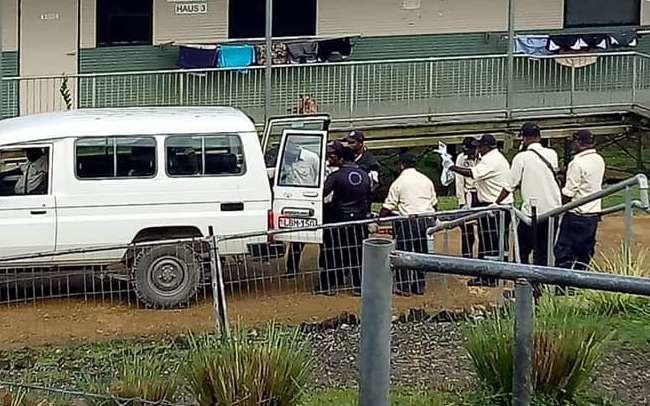
Refugees and asylum seekers are sitting on one side of a gate while guards are standing on the other side.

By Natalie Whiting - ABC News

The Australian and Papua New Guinea governments have agreed to a limited extension of the contracts to provide services to asylum seekers, before the PNG Government takes over.
The contracts for work on Manus Island were to expire at the end of the month.
The two governments released a joint statement saying they were committed to "ongoing cooperation to ensure quality and sustainable services are in place to support the health, welfare and safety of transferees".
The statement said the PNG Government intended to assume responsibility for service delivery and would contract local providers "through an open market competitive procurement process".
To allow time for that to happen and to ensure services are maintained, the governments have agreed to a limited extension of existing contract arrangements along with a review of those arrangements.
The statement said the transition would happen within the "quickest possible time" and then the Australian-held contracts would be terminated.
No time frames for the contract extensions or transition have been outlined.
The announcement came after a week of political disagreement.
After Home Affairs Minister Peter Dutton said the $423 million security contract held by Paladin would likely be extended, the PNG Immigration Minister and then Mr Marape called for the contract to be terminated.
The awarding of the contract to Paladin is currently being investigated by Australia's auditor-general, though the Home Affairs Department has defended the arrangement.
Paladin has said it is unable to speak about the specifics on its contract on the island but in a statement the company has defended its work in the area.
"Paladin has an outstanding track record in the region as an ethical provider of security, safety, risk management, community engagement and garrison services with significant expertise in working in partnership with local communities," the statement reads.
"We have more than 4,500 employees across the Asia Pacific region and our partnership model is built on the participation, training and mentoring of local staff and landowners to achieve stability and prosperity.
"We employ a majority local workforce, buy local and ensure we become a valued part of the communities we operate in. "
Home Affairs secretary Michael Pezzullo told a Senate hearing in February the PNG Government was planning to take over responsibility for the services in October 2017, but in July that year decided it could not proceed because it was in caretaker mode ahead of an election.
PNG says local companies now have the capacity and expertise to provide security services on Manus Island and would like to see a transparent tender process introduced.
Shadow Home Affairs Minister Kristina Keneally said in a statement Labor "welcomes the fact an open market competitive procurement process will be undertaken for future contracts in PNG".
"Australia still has skin in the game and it is incumbent on Peter Dutton to ensure any future contracts in PNG are fit for purpose and ensure value for money if services are being funded by the Australian taxpayer," she said.
Asylum seekers who had been trying to reach Australia were first sent to PNG for offshore processing nearly six years ago.
They have been living in accommodation centres in the local community, which are guarded, since the detention centre was closed in late 2017.

Thursday, June 20, 2019

Fears Bougainville independence will open Pacific door for China

Foreign Minister Marise Payne will visit Bougainville today. Picture: AP

By Ben Packham - The Australia

Foreign Affairs Minister Marise Payne will visit Bougainville today amid fears an upcoming independence vote there could undermine regional stability and provide an opening for China to establish a strategic foothold in what could become the Pacific’s newest nation state.
The visit is the first by an Australian minister since a bungled 2015 attempt to open an Australian consulate led the PNG government to slap a ban on Australian officials travelling to the autonomous region.
Papua New Guinea, which fought a decade-long civil war with Bougainville rebels ending in the late 90s, is trying to convince Bougainvilleans to remain an autonomous PNG province.
PNG Minister for Bougainville Affairs, Sir Puka Temu, said Bougainville’s people needed to understand what “cutting the umbilical cord from Papua New Guinea” would mean.
“The revenue for Bougainville is only 20 million kina ($8.6m) per year,” Sir Puka said.
“They will need, according to international studies, at least 900 million kina ($390m) a year to rebuild Bougainville as an independent state.” He said independence would also mean “Papua New Guinea will not be able to be politically responsible for an independent Bougainville state”.
Bougainville’s people will vote on October 17 to either become an independent state or to have greater autonomy within PNG.
There is a widespread expectation that Bougainvilleans will vote in favour of independence in a result that would then have to be ratified by the PNG parliament, where it could face opposition from MPs who fear other provinces could follow.
PNG Prime Minister James Marape has said PNG was “stronger with Bougainville than without” but it would listen to the people of Bougainville “and then consult on options for the future”.
Lowy Institute Pacific program director Jonathan Pryke said the referendum outcome would have strategic implications “thanks to the active presence of China throughout PNG and the broader Pacific”. “Given the new strategic landscape, and not to mention the huge reserves left in Panguna (copper) mine, I would expect an independent Bougainville would have a number of potential international suitors to help them with their financial challenges,” Mr Pryke said.
Senator Payne was in Port ­Moresby yesterday for meetings with members of Mr Marape’s government, amid friction over the likely renewal of a $20 million a month Manus Island security contract for Paladin Solutions.
PNG Immigration Minister Petrus Thomas has called for Paladin’s contract to be terminated at its June 30 expiry, but Home Affairs Minister Peter Dutton indicated this week it would be extended. Paladin yesterday said a case involving four guards from subsidiary firm Black Swan International who allegedly shot into a crowd, injuring four people, was “considered closed” by police.
Paladin said it had an “outstanding track record as an ethical provider of security, safety, risk management, community engagement and garrison ­services”.
Mr Dutton’s office has refused to release an Ernst & Young report on the awarding of the contracts to Paladin to provide security services on Manus Island.

Monday, June 17, 2019

Paladin says it has ethical track record on Manus Island

A suicidal refugee is taken to hospital by Paladin security staff.

Posted on Radio New Zealand

The company providing security at refugee camps on Papua New Guinea's Manus Island says it has an outstanding track record as an ethical provider.
Paladin's $US300 million contract with the Australian government is due to expire at the end of the month and the PNG government wants it replaced by a local company.
The Australian government said it expected Paladins' contract would be renewed even though the Auditor General is reviewing the previous tendering process.
Paladin said it was the longest serving contractor operating on Manus Island where it had worked since 2013.
It employs a majority local workforce, buys local products and undertakes community projects, it said.
These include running a volleyball tournament, a recycling initiative and a community garden in conjunction with Manus company Peren.
Peren is part owned by members of Manus Island's Pomat family, who are related to the speaker of the PNG parliament Job Pomat.
Paladin said it was unable to comment on its contract with the Australian government but it said its focus remained on the safety of residents and ensuring continuity of care.
About 500 refugees remain on Manus Island where they've been detained indefinitely without trial for six years.
Manus Island refugee Shaminda Kanipathi said the refugees were not happy with any of the companies providing them services.
"It doesn't matter whether it's a local company or a foreign company. The treatment and the situation is going to be the same as it always has been on Manus."
In February, Paladin's Manus Island employees walked off the job for two days calling for higher wages. Some were being paid as little as $AU2 an hour.
Then in April, a Paladin employee on Manus Island was arrested and charged with sexual assault.

Sunday, June 16, 2019

PNG rejects PM’s Paladin $20m-a-month extension

Kristina Keneally said Peter Dutton had strengthened Paladin̢۪s hand. Picture: Adam Yip

By Ben Packham - The Australian

Scott Morrison’s push to “step up” Australia’s relationship with Papua New Guinea is set to come under pressure over his government’s plan to renew a $20 million-a-month Manus ­Island security contract with ­controversial company Paladin Solutions.
PNG Immigration Minister Petrus Thomas yesterday told The Australian that his government wanted the Paladin contract cancelled and for the work to be given to a locally owned company.
“The PNG government position is to … terminate the Paladin contract by end of this month,” Mr Thomas said.
“The PNG government wants a transparent tender process and most importantly will strongly recommend national content. PNG companies now have the ­capacity and expertise to do the job.”
He said PNG chief migration officer Solomon Kantha had conveyed this message to Peter Dutton’s Home Affairs Department.
However, Mr Dutton yesterday indicated Paladin would have its contract to provide refugee ­facility security services extended beyond its June 30 expiration.
“The likely arrangement is there will be a continuation. I’m not going to comment when the department is in the process of contract discussions, negotiations et cetera,’’ Mr Dutton said.
The Auditor-General is investigating the awarding of $423 million worth of contracts to Paladin without a tender process.
Paladin chief executive Craig Thrupp is also currently banned from entering PNG.
Manus Province Governor Charlie Benjamin also urged against retaining Paladin, which has a partnership with a local landowner company with links to another Manus MP, Job Pomat.
“I think that Australia ought to do the right thing and give it to another company, not Paladin,” Mr Benjamin said. “It doesn’t look good. There is a lot of suspicion.”
He said the facilities housing refugees and asylum-seekers on Manus for Australia were on provincial government land, and any new security provider must ­include the provincial administration as a shareholder.
Mr Pomat, the MP for Manus Open and an ally of former PNG prime minister Peter O’Neill, had earlier praised Paladin for doing business “the Papua New Guinean way” over its deal with Manus landowner company, Peren Investment, which is 60 per cent owned by Mr Pomat’s brothers, Kepo, Allan and Polosong.
New PNG Prime Minister James Marape recently met the Australian high commissioner to PNG, Bruce Davis, saying the ­relationship between the two countries had evolved “to one of equal partnership, with more focus on a comprehensive economic and strategic partnership”.
Mr Morrison was one of the first world leaders to phone Mr Marape, who has vowed to make his country “the richest black Christian nation on Earth”, when he took the leadership last month following the forced resignation of Mr O’Neill.
The Paladin group, which had its Australian headquarters registered to a beach shack on Christmas Island, had its contract to provide “garrison services” at three sites extended in January at a cost of $109m.
The extension, to June 30, lifted the value of its Manus contracts to $423m for 22 months work.
At the time there were about 422 refugees and asylum-seekers housed at the three camps: 213 at East Lorengau, 111 at West Lorengau and 98 asylum-seekers at Hillside Haus.
Labor home affairs spokeswoman Kristina Keneally said Mr Dutton had strengthened Paladin’s hand in any negotiation.
“Paladin can call the government Monday morning and demand whatever they want because Peter Dutton has let the cat out of the bag that the government has no one else, apparently available to continue those services,” Senator Keneally said.
Mr Dutton said he didn’t want any government money spent on Manus Island or Nauru because “I don’t want people there; I want them off as quickly as possible”.
Go to this link for more: https://www.theaustralian.com.au/nation/politics/png-rejects-pms-paladin-20mamonth-extension/news-story/06c0bfb6047aebf4b6d63ad4d2f8e88c

Friday, June 14, 2019

PM Discusses Bilateral Issues with Australian High Commissioner


Posted on Legend FM

Prime Minister James Marape met with the Resident High Commissioner of Australia to Papua New Guinea Bruce Davis recently to discuss key bilateral issues between the two countries, since his assumption of Office.

Prime Minister Marape reaffirmed the historical connections that existed through the colonial administration including the excellent warm and friendly relations that have been enjoyed since establishment of diplomatic ties in 1975.

“The relations between both countries has matured and has been through active and consistent engagements in all sectors,” the Prime Minister said.
“The relations, furthermore have evolved from an aid dependency focus to one of equal partnership, with more focus on a comprehensive economic and strategic partnership.

“The Australian Government’s continuous support in the Rural Electrification Project and the successful launching of the program in more than three provinces.

“This program is a national project and we would like to see it rolled out to all the provinces by 2030.”

Prime Minister Marape also assured the Australian Government that the Papua New Guinea National Government was committed and would fully support the upcoming referendum on Bougainville.

“The Bougainville issue remains an important test for PNG, as it impinges on the issue and question of sovereignty and territorial integrity and the outcome of the referendum should be within the parameters of the National Constitution.

“The outcome of the referendum and the question of independence and greater autonomy have to be dealt with sensitively,” said Prime Minister Marape.

Prime Minister Marape in concluding their discussions thanked the Government of Australia for the recent announcement of its increased annual aid package and encouraged High Commissioner Davis to elaborate on the priority areas that the Australian development assistance would be targeted under the existing national development plans and initiatives such as the Medium Term Development Plan III.

He also took time to introduce the recently appointed Foreign Minister of his Cabinet, Hon. Soroi Eoe to the Australian High Commissioner.

Go to this link for more: https://www.legendfm.net/blog/pm-discusses-bilateral-issues-with-australia-high-commissioner?fbclid=IwAR0KOvX2_w9Kr2m72kT-wuOoJwPV7OEzi1fwAlu9DOaFXLgUi1Zmq_4lyiA

Featured Post

Cashless in China as I study for my PhD

                                WeChat and Alipay digital payment applications By BETTY GABRIEL WAKIA - posted on PNG Attitude Blog PORT MOR...