Showing posts with label Government. Show all posts

Tuesday, September 10, 2019

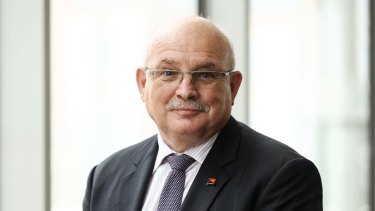
No change to deputy PM


By REBECCA KUKU The National 

PRIME Minister James Marape has denied talks and rumours that he is appointing a new deputy prime minister to replace Davis Steven.
In a WhatsApp response to The National yesterday evening, Marape said: “False.
Marape was asked: “There are talks that there is a new DPM. That a member of the NA (National Alliance Party) is now the new DPM and has replaced Davies Steven?”
The talks and rumours follow a viral posting being circulated in social media Facebook (PNG Current News) that read: “Patrick Pruaitch Deputy Prime Minister Davis Steven OUT!”
The National also learnt that Marape had a meeting with key political leaders in his office on Friday following news reports that the Supreme Court had allowed Opposition Leader Patrick Pruaitch to proceed with a court reference questioning the election of Marape as PM in Parliament on May 31.
The NA had also called for a press conference in the PM’s office in Parliament to announce its move to the Government but cancelled it after three hours.
Meanwhile, Steven, who is also Justice Minister and Attorney-General, failed to turn up for two official functions on Friday and yesterday.
The functions are related to the ongoing 2019 Commonwealth Magistrates’ and Judges’ Association (CMJA) Conference in Port Moresby.
Pruaitch is the party leader for the National Alliance.


Go to this link for more: https://www.thenational.com.pg/no-change-to-deputy-pm/

Monday, August 19, 2019

KPPA AND OTHER STAINS ON THE NEW MARAPE GOVERNMENT


Posted on PNG Blogs

New Prime Minister James Marape has loudly trumpeted his commitment to fight corruption and he has vowed an Independent Commission Against Corruption (ICAC) will soon be established.
But actions speak louder than words.
After all, Peter O’Neill came to power making very similar promises.
Indeed, the exact same commitment to establishing an ICAC was the centrepiece of O’Neill’s rhetoric from day one. It was included in both the Alotau Accords (I and II) and the National Anti-Corruption Strategy. Yet, for all the talk, nothing was ever delivered.

Marape was voted into power on 30 May, so we should not jump to judge too quickly. But it is concerning that after more than two full months in power we are still waiting to see a draft ICAC law published and we are still waiting to hear who has been appointed to chair the UBS/Oil Search Commission of Inquiry.

Meanwhile, corrupt institutions that even the previous O’Neill government promised to shut down, seemingly have a new lease of life under the new government.
It is claimed Minister for Housing Justin Tkatchenko is reviving the notorious National Housing Estate Limited.
NHEL is a body that PNGi has previously exposed for its misdeeds and it was none other than James Marape himself, as Minister for Finance, who supposedly signed the company’s death warrant in 2017.
Meanwhile, Minister for Petroleum Kerenga Kua, is also playing with fire.
He has been holding high-level meetings with the disgraced Chief Executive Officer of the Konebada Petroleum Park Authority, Donald Valu.
KPPA has attracted widespread criticism.
In 2017, the National Research Institute was the first to ask whether the whole organisation might not just be a scam, created to defraud the public purse and customary landowners.
Deeper research published by PNGi revealed the Public Accounts Committee had long condemned the KPPA for its financial mismanagement and pointed to a whole range of irregular transactions and governance weaknesses.
This was soon followed by further revelations.
First PNGi exposed that in a single year, 2016, KPPA had apparently spent 50% of its K5.6 million government appropriation on hire cars. Eighteen different firms were the beneficiaries, one alone receiving K580,000.
PNGi then exposed several more layers of controversy, involving further mysterious corporate sales and purchases, links to Hong Kong and China, life-long appointments, possible conflicts of interest and potential breach of PNG’s strict citizenship laws.

Then serious allegations of fraud and mismanagement were made against the KPPA Chief Executive Officer, Donald Valu.
Those allegations were given even greater weight in April this year, when PNGi exclusively revealed a Ministerial Briefing Paper which states that
“On the January 13th 2019, Finance Department filed a non-compliance civil proceedings against the CEO of KPPA, Donald Valu in the National Court for non-compliance to statutory financial instructions in accordance to PFMA and alleged misappropriation of the Petroleum Park Authority Funds totalling over K13m during the periods 2010 to 2015”.

Given this very public history, it is perhaps not surprising a number of attempts have been made to abolish the KPPA. Since 2017, the National Executive Council has variously 
ordered its abolition, ordered its senior management be investigated and ordered its functions be divided up between Kumul Petroleum Holdings Limited and Treasury.

Yet, despite all these NEC decisions and public revelations, just four weeks ago, on July 9, new Petroleum Minister Kerenga Kua invited Valu and his cronies to give a presentation to him at the Hideaway Hotel.

Although the Minister also invited KPPA staff members – who have been patiently waiting for their retrenchment since November 2017 – to attend the briefing, when they arrived they were told they were not welcome and had to leave. Yet, it is alleged, former Treasurer and Finance Minister Don Polye was allowed into the meeting and took a seat right alongside Valu.
Also present were Ori Avea, KPPA Executive Manager Corporate Services and co-signatory to KPPA funds, Samuel Pepena, Managing Director of KPPA subsidiary Petroleum Parks Holding Limited, and two former Department of Petroleum and Energy staff members, Kepsey Puiye, former acting Secretary, and Channan Kumalau, a previous Director Corporate Services. 
Since the meeting with the Minister, Valu has continued to hold office as if nothing is amiss and he is still in full charge of a functioning institution. He has even issued a letter of termination to one staff member, while telling other staff by email to:
“Please wait patiently as we get KPPA back to normalcy under the new Minister Kua and Prime Minister Marape’s Government”. When we see government decisions to abolish outlaw organisations being ignored or quietly stepped over, and very serious allegations of fraud not been referred to the police, it is easy to see the game that is being played.
Sometimes media exposure and public disgust can create so much pressure on an issue that politicians are forced to be seen to be taking seemingly decisive action. But then, as with both the National Housing Estate Limited and the Konebada Petroleum Park Authority, the issue can quickly fade from the public consciousness. And, in truth, nothing is ever done, decisions are ignored, or worse, quietly reversed and those who have been scoffing at the feeding bowl quietly resume their feasting.
The stains on the Marape government are already appearing and until we see action on an ICAC, action on the UBS/Oil Search COI and see that organisations like NHEL and KPPA finally disappear and their leadership facing criminal charges, those stains will only grow.
In the meantime, we should all fear that our new Prime Minister is not at the helm of a new government at all, that the deckchairs have simply be rearranged on the decks of a sinking ship and that in Papua New Guinea it is business as usual for a corrupt political elite and the hungry mouths they feed.

Go to this link for more: http://www.pngblogs.com/2019/08/kppa-and-other-stains-on-new-marape.html

Tuesday, August 6, 2019

Law & order must be nambawan priority of government: Ipatas

Image result for daniel kumbon
By DANIEL KUMBON - Posted on PNG Attitude
WABAG - If there is one thing Enga governor Sir Peter Ipatas wants to see happen in Enga Province, it is to see his people prosper in a peaceful environment.
He would like many tourists to come annually to events like this Friday’s Enga Cultural Show or to major sporting events like the recent rugby match between Easts Tigers and PNG Hunters in the Queensland Intrust Super Cup completion.
The promotion of tourism is now one of the major policies of the Enga Provincial Government and it aims to promote peace in the province and enable the people to tap into the lucrative tourism industry.
Governor Ipatas has personally involved himself in bringing in visitors like birdwatchers and people who wanted to see how traditional salt was made at Mulisos Yokonda Salt ponds near Sirunki.

He said one reason why he was forced to resign from Peter O’Neill’s PNC-led government three months ago was because he felt the government was not seriously promoting peace in the country by addressing the dire law and order situation.
Now, he is satisfied that prime minister James Marape has appointed a most capable police minister in Bryan Kramer who he believes will transform the police force to support the new government’s pledge to take back PNG.
Sir Peter shocked many people when he joined an unprecedented exodus of resigning members and senior ministers especially as many impact projects had been established in Enga by the O’Neil – Abel government.
Among these multi-million kina projects were the Enga College of Nursing, Enga Provincial Hospital, Sirunki Agro Project, Wapenamanda Airport, Tsak Road, Philikambi Sub-district office, Tuition Free Education policy and the upgrading of the Togoba – Wabag road.
O’Neill had regularly visited Enga to officiate at groundbreaking ceremonies or to open completed projects like the main administration building at Enga Teachers College which was named after him.
“Yes, O’Neill’s service to Enga was A1 but I resigned to take back PNG and promote peace and unity in my province,” Sir Peter told an enthusiastic crowd of over 500 UPNG Enga students in May, a couple days before Marape was elected the eighth prime minister of PNG.
“Enga is a volatile province where law and order should be the number one priority of any government.
“Many people die every year in gun battles, cold blooded killings, armed hold-ups and other serious crime which impeded development.
“Any government can build multibillion kina projects but if underlying social problems like law and order was not tackled head on, the reality is that these projects can be reduced to ashes and the funds and time spent becomes wasted effort,’ Ipatas said.  
He said the Royal PNG Police Constabulary was weak, under-resourced and the police personal poorly trained to conduct proper investigations to track down criminals and effectively prosecute the perpetrators.
Even as he was speaking in Port Moresby, the Highlands Lutheran International School, one of Enga’s iconic educational institutions was smoldering in ruins after a series of arson attacks perpetrated by unknown arsonists.
On 5 May, the school lost a classroom in a fire believed to be deliberately lit by arsonists.
Two days later on 7 May, the principal's residence was burnt down at 2.30 am. The principal and her children who were fast asleep at that hour were rescued unhurt but in total shock.
After that on 14 May, the girls’ dormitory was set ablaze at midday.
Boarding students from the Enga Teachers College who also resided there lost everything they owned and left only with the clothing they wore and the books and pens they held in their hands.
Last year on 16 October, the school lost the main office complex, adjourning classrooms and the library was razed by a fire
It is very hard to put a monetary figure to all the destruction incurred by the school.
Ipatas was concerned that not one single suspect was ever arrested by police.
He said he had to make a move to install a new government to save PNG from total disaster, safeguard the livelihood of ordinary people and secure the future of all students as future leaders of PNG.
“If elected leaders did nothing to take back PNG from corporate theft, poor governance tribal warfare and deep rooted corruption than PNG as we know it will never be the same,” he said
Ipatas said O’Neill had chronically failed to listen to his advice on how to address serious national issues like law and order so prevalent in the country.
He said two years ago, he had advised O’Neill to make formal requests to the Australian government so their federal police could come and help us control the escalating law and order situation in the country.
He claimed our own police wanted allowances first before they could do anything and were of no help in the fight against crime.
Ipatas felt his 21 years of hard work in building infrastructure and other developments in Enga would go down in one day of tribal warfare in which people used high-powered guns to kill each other and destroy property.
Last year, police did not arrest any suspect in a tribal war which saw over 10 men killed and destruction to property worth millions of kina which occurred right in the heart of Kandep town.
The Enga Provincial Government allocated enough funds but the police had failed miserably to make any arrests – the cause of which was over a woman who had been seeing two men.
“Who in PNG will fix our law and order problems if we politicians turn a blind eye on the biggest threat to development and peace – law and order. We do not have freedom so we have to address this issue and allow our people to live peacefully,” Ipatas said.
Sir Peter has been a politician all his life – 18 years in local level government and 22 years in provincial and national level politics.
He has the experience to clearly see that law and problems can very easily wipe out everything the government or individuals have accomplished.
He said one way to safeguard lives and properties was to ensure government departments like police and statutory bodies like the Ombudsman Commission were allowed to operate independently free from political influence.
The government will have to strengthen these institutions by allocating more funds and resources to enable them to effectively uphold the rule of law.
“I am happy I played a part to install the new Marape- Davis government which already seems to be wining the confidence of the people,” he said.
“I know Enga will gradually change. More visitors will come when there is peace and unity among the people.”

Go to this link for more: https://asopa.typepad.com/asopa_people/2019/08/law-order-must-be-nambawan-priority-of-government-ipatas.html


Monday, August 5, 2019

Government Not Receiving Fair Share: Study


Posted on Post Courier
A recent study based on the PNG Extractive Industry Transparency Initiative (PNGEITI) Reports have found that the PNG Government is not receiving its share of resource benefits and recommended government broaden its economic base in order to increase its bargaining power in current and future extractive projects.
The research study titled: Does the PNG government get its fair share from the resource sector? -was presented at a public seminar at the Institute of National Affairs in July to an audience representing Government, Industry and Civil Society stakeholders.
It focused on the Government’s ability to increase its bargaining power in its current and future planned resource projects.
The study was undertaken by Economists, Associate Prof Martin Davies at the university of Washington and Lee and Dr Marcel Schroder economics lecturer at Lebanese American University.
Both researchers are also guest lecturers at the University of Papua New Guinea and the Institute of National Affairs.
The researchers constructed a new database based on the PNG EITI annual reports that documents fiscal resource revenues for a large set of resource rich countries from 2006 to 2017.
“Using this dataset, we analysed the PNG governments’ take from the resource sector and study its determinants through a simple game-theoretic model as well as regression analysis.
This allowed us to make comparisons between Papua New Guinea and other resource rich developing countries,” said Prof Davies.
“Salary and wage tax is largest payment received. Papua New Guinea is the only country in our database of 50 countries where this is the case. Corporate income tax and royalties seem unusually low,” said Dr Marcel Schroder.
The study provided potential Fiscal Regime recommendations.
“PNG is a developing country which means funds for crucial spending such as infrastructure, health and education are needed today rather than tomorrow. Therefore, avoid deals with MNCs that lead to extreme back-load of fiscal take,”
They also recommended avoiding giving too many incentives (loss carry forward arrangements, tax concessions, treating royalties as advance income tax, etc.) and recommended that the State reconsider zero rating GST.
“Many resource rich countries derive significant revenue through GST.
It is also relatively easy to administer. Consider relying more on royalties on sales.
“They have many advantages with Revenue flows today vs tomorrow, they are more stable than income tax and other payments and they are relatively easy to administer,” said Prof Davies.
The study encouraged the audience to understand reasons behind low income tax payments. Is it only due to fall in commodity prices.
“There seems no mechanism for government to benefit from exceptionally high commodity prices (e.g. additional royalty, excess profit tax). Therefore, in future, if deal offered by MNC isn’t attractive, valid to leave resources in the ground for later,” said Dr Marcel Schroder.
The researchers further provided economy-wide policy recommendations.

Go to this link for more: https://ramumine.wordpress.com/2019/08/06/govt-not-receiving-fair-share-study/

Sunday, June 30, 2019

PNG Govt told to explain what's happening to historic sites

Intricate artwork displayed on the facade of the Papua New Guinea parliament building in Port Moresby.

Posted by Radio New Zealand

There's a call for the Papua New Guinea government to explain what is happening to the country's culturally important sites.
The president of the Farmers and Settlers Association, Wilson Thompson, has served on many of the boards and trusts of cultural institutions, such as the National Museum & Art Gallery and the National Cultural Commission.
But he's appalled at the lack of action by relevant agencies to save critical sites such as the original PNG legislature building, and its grounds, in Port Moresby.
"It was in the prime commercial area in the capital and what has happened, and everyone knows that is the site of the old House of Assembly or the first parliament of Papua New Guinea. But all of a sudden that site has been offloaded, or given it away, or somebody came in and took it and it has now become a private facility altogether," said Wilson Thompson.
Wilson Thompson said other key sites, including Paga Hill National Park and Lae's Amelia Earhart Memorial Park, appear to have also gone to private developers without explanation to the public.

Friday, June 28, 2019

Cancel all seabed mining licences


By PNG Council of Churches | Voice of Milne Bay | Alliance of Solwara Warriors | Bismarck Ramu Group | Centre for Environmental Law and Community Rights
Dear Hon. Prime Minister,
Congratulations on your recent election as the new leader of Papua New Guinea and for the establishment of your new cabinet! This fills our hearts with hope for a better future. 
We, the PNG Council of Churches, Voice of Milne Bay, Alliance of Solwara Warriors, Bismarck Ramu Group and the Center for Environmental Law and Community Rights, would like to draw your attention to the issue of deep sea mining in our Bismarck and Solomon Seas.
We stand with the communities of the West Coast of New Ireland Province, Duke of York Islands, East New Britain, Madang, Manus and Milne Bay Provinces who oppose sea bed mining under the Alliance of Solwara Warriors. 
Together we call on the Papua New Guinean Government to cancel all Nautilus Minerals’ deep sea exploration licences, mining leases, and environment permits.
Our communities already face many unsustainable developments impacting our lands, oceans, lives, and livelihoods. This includes mining, logging, and oil palm operations. The risks and uncertainties of experimental seabed mining are too great to allow this industry to ever proceed in Papua New Guinea.
We have our own economies and natural resources to sustain and support our daily survival. We ask our government to invest in these.
Our coastal communities have always been connected with our seas. The sea is central to identity, livelihoods and culture practices. It cannot be separated. 
We simply do not want Seabed Mining in PNG’s Waters.
The former government made a bad investment decision by buying into Nautilus Minerals. Our country and ordinary citizens are paying the price. The $US120m equity, a loan from BSP, that the Government invested in the Solwara 1 project could have been used for medical supplies, education, and much-needed infrastructure. 
Nautilus Minerals is currently seeking protection for alleged bankruptcy and is re-arranging its affairs to protect the interests of its officers and two major shareholders. It seems like the company is not considering the impact on its shareholders which includes the PNG government.
We look to your leadership to ban seabed mining in our country and to use our nation’s funds wisely.
Therefore, we call on the new Papua New Guinea Government to:
1. Terminate the Solwara 1 mining lease and environmental permit, and all of Nautilus Minerals’ exploration licences
2. Demonstrate that it has learnt from the very costly mistakes of the former Government of purchasing a 15% stake in Nautilus Minerals and commit to:
a. Never taking up a stake in any deep sea mining venture in the future;
b. Not issuing any more exploration licences or mining leases for deep sea mining; and
c. Providing real and lasting support to communities right across Papua New Guinea by assisting thriving artisanal fisheries, growing the fledgling ocean based eco-tourism sector, and funding communications and transport infrastructure, education and health services. 
We anticipate your favourable response, and we thank you and wish all God’s blessings on your efforts as our new leader.
Go to this link for more: https://ramumine.wordpress.com/2019/06/29/cancel-all-seabed-mining-licences/

Wednesday, June 26, 2019

Government committed with budget, says Abel


Posted by The National

PAST and present governments remain committed to every single element of the budget, Finance Minister Charles Abel, pictured, says.
Abel was responding to East Sepik Governor Allan Bird’s questions on non-payment of functional grants.
He told Parliament that he had fulfilled that commitment with 100 per cent funding for functional grants last year.
“That commitment remains, however it is up to the incoming Treasurer and the government to review the budget as to where we are,” Abel said.
“I remain confident that the budget can be fulfilled in totality, subject to everybody putting their heads together now and getting down to the hard work of making sure that those revenues do come in.
“Every element of the expenditure side can be fulfilled and that includes the functional grants of district and provincial services improvement programmes.
“There is an incoming government and a new front bench and new treasurer who will take the opportunity tomorrow to give some of the background on how the 2019 budget is performing.
“If everyone gets together and gets on with the business of the government and get that revenue in, we will be able fulfil all those expenditure commitments in the budget for the remaining six or seven months of the year.”
Abel also talked about some of the aspects of the revenue side of the budget that were lagging behind.

Go to this link for more: https://www.thenational.com.pg/government-committed-with-budget-says-abel/

Tuesday, June 25, 2019

Japan, US and Australia begin own 'Belt and Road' in South Pacific


By Hisao Kodachi - Nikkei Asian Review

TOKYO -- Japan, the U.S. and Australia have picked a liquefied natural gas project in Papua New Guinea as their first case for joint financing in the Indo-Pacific region, planning to lend over $1 billion, Nikkei has learned.
Three government-backed lenders -- Japan Bank for International Cooperation, the U.S. Overseas Private Investment Corp. and Australia's Export Finance and Insurance Corp. -- plan to issue a statement on Tuesday regarding their joint infrastructure efforts.
The three countries agreed in November to join hands in financing infrastructure projects in the Indo-Pacific to offer an alternative to China's Belt and Road initiative. The LNG project in Papua New Guinea marks the first project in this three-way cooperation.
A team from Japan, the U.S. and Australia discussed the project with the government in Port Moresby in April. Plans will be finalized over the next two to three years. Additional assistance for power plants and communications infrastructure could follow.
Papua New Guinea has picked China's Huawei Technologies to build its internet infrastructure. But Australia, which is helping to develop a naval base on the island nation, worries that military intelligence could be leaked to Beijing through the network. U.S. Vice President Mike Pence said in November that Washington will help its Australian ally with the naval base.
A liquefied natural gas carrier docks near a plant outside Papua New Guinea's capital of Port Moresby in November.   © Reuters
Elsewhere in the Pacific, Beijing is assisting Vanuatu with building a port, while China and Australia are competing over defense cooperation with Fiji.
Japan, the U.S. and Australia also see other Pacific nations such as the Solomon Islands and Palau as candidates for joint infrastructure financing. They plan to send a delegation to members of the Association of Southeast Asian Nations to examine potential projects.
The three countries will abide by the Group of 20 principles for quality infrastructure investment, drafted at a meeting of finance ministers and central bankers in early June. The principles are expected to be formally adopted at the G-20 summit in Osaka later this week.
Washington will establish a new agency, the U.S. International Development Finance Corp., as early as October to absorb OPIC. The new lender will have a $60 billion portfolio cap, nearly double OPIC's limit.
Canberra is launching the Australian Infrastructure Financing Facility for the Pacific in July with 2 billion Australian dollars ($1.39 billion) in funding, while expanding EFIC.
Combined with Japan's JBIC, which lends out 1.7 trillion yen ($15.8 billion) yearly, the countries will be able to tackle even larger projects in the future.

Go to this link for more: https://asia.nikkei.com/Politics/International-relations/Japan-US-and-Australia-begin-own-Belt-and-Road-in-South-Pacific

Governrment To Review FIFO: Minister


Gorethy Kenneth | Post Courier | 
The government will review the fly in-fly out (FIFO) workforce arrangements for foreign workers. This may now put an end to K91 million spent annually on this exercise. Minister for Immigration and Border Security Petrus Thomas announced this yesterday.
Mr Thomas said the Immigration and Citizen Authority (ICA) is now looking at issuing long-term working residence visas by next year which is in line with its organisational reform and improvement of service delivery under its Five-year Corporate Development Plan (2018-22).
The Minister referred to the study carried out by National Research Institute in 1997 on the effects of fly in-fly out on the Porgera mining project which revealed that the PNG economy was losing between K36 million and K91 million annually on direct national income.
He said the Bougainville Copper Mine had successfully maintained a small satellite mining town with classic facilities that were built to accommodate workers for the Bougainville Copper Mine.
“There was sufficient cash flow injected directly into the local communities with high returns gained from the capital investments, he said.
Mr Thomas said these changes to the frequent abuse of the 60-day multiple entry visa by foreigners had prompted him to suspend it last year.
“The multiple entry visa category had been reviewed and will be introduced again once cabinet approves the new conditions, fees and guidelines,” he said.
Similarly, Mr Thomas was of the view that the fly in-fly out practice has also been abused by many foreign em-ployers and contractors after receiving criticisms lately from MPs and concerned landowners of resource project areas.
“The fly in-fly out practice may have worked in some short-lived projects, but the impact of FIFO and contribution to host communities, their social welfare and economy has never been truly assessed in long-term projects,” he said.
Mr Thomas said part of the issue lies in the distant lack of national data. “Various agencies supposed to be integrated to streamline these processes had not succeeded,” he said.
“There was no viable data or studies carried out in the past to justify foreign workers’ fly in-fly outs continuous practice.
“It appears that PNG has been under the notion that the FIFO system works in every particular way and no one bothered to review it.”
Mr Thomas said while the government is embarking on developing few new resource projects like Wafi-Golpu and the Papua LNG Project, it should also be mindful of such fly in-fly out arrangements that could potentially suck opportunities during this thriving economic situation.
Go to this link for more: https://ramumine.wordpress.com/2019/06/25/govt-to-review-fifo-minister/

Friday, June 21, 2019

BRC cannot extend Bougainville enrolment period

A tentative date of June 15th 2019 has been set for a referendum on possible independence in the Autonomous Papua New Guinea region of Bougainville.

Posted by Radio New Zealand

The Bougainville Referendum Commission, or BRC, is not able to extend the enrolment period for people to vote in a referendum on independence from Papua New Guinea.
Enrolment ends on Sunday and the BRC is constrained by rules laid down by the governments and cannot move on this date.
Bougainville women's MP, Francesca Semoso, said there is a need to extend the period by at least two weeks, but the chief electoral officer Mauricio Claudio, said there is literally no more time for what he calls 'phase two' or the active enrolment of voters.
He said a key factor is that the writs must be issued on 16 August ahead of the referendum vote starting on 12 October.
Mr Claudio said only the two governments have any authority to change the dates.
He said the governments were late establishing the BRC and its work has subsequently been hampered by a lack of time and funding.
But Mr Claudio assures there will be a third phase when the rolls will be displayed for everyone to check they are on it and if they are not they will then be able to enrol.
But he stresses that this phase can only run for a seven-day period.

Wednesday, June 5, 2019

PAPUA NEW GUINEA – ONE OF THE BIGGEST LAND GRABS IN MODERN HISTORY


Posted on Global Witness
Global Witness has been documenting the Papua New Guinea government’s failed response to one of the largest land grabs in modern history. In recent years roughly 12 per cent of the country has been annexed to timber and palm oil companies using a leasing system intended for small-scale agriculture. Three years after a national inquiry was launched into allegations of widespread fraud and illegality surrounding the acquisition of this land, the government has taken no meaningful action to defend its citizen’s rights to their land and halt the wholesale destruction of rainforests of global importance.
Our briefing paper documents:
  • Government inaction – The government has failed to stop any logging operations under Special Agriculture & Business Leases, even where an official investigation recommended they be cancelled. 
  • Breakdown in law and order – Logging and exports continue unabated and with the support of local police and forest authorities in the one operational Special Agriculture & Business Lease the government has cancelled. 
  • Failure to complete review of leases – More than three years after committing to review the legality of these leases, around 40% have not been reviewed, including the three largest timber exporting operations. 
  • More logging authorized – The National Forest Board continues to issue and renew permits to log and clear rainforest under this leasing system, ignoring community complaints and the government’s own decision to repeal it. 
  • Timber grabbing – Many Special Agriculture & Business Leases have been used for industrial logging rather than their intended purpose to promote agricultural development. These leases now account for nearly a third of the country’s total log exports, with an export value of roughly US$100 million a year. 
  • Total impunity – No government officials or companies involved in the abuse of these leases have been prosecuted or sanctioned where evidence of criminality or negligence was uncovered by an official investigation.

Go to this link for more: https://www.globalwitness.org/en/campaigns/land-deals/papua-new-guinea-one-biggest-land-grabs-modern-history/

Friday, May 10, 2019

Oil Search signs multibillion-dollar PNG gas deal


Oil Search CEO Peter Botten said the deal will be a boon for Papua New Guinea, which has acquired a major share of the new LNG project.

By Cole Latimer - The Sydney Morning Herald 

Oil Search has signed an agreement with the Papua New Guinean government to develop a $US15 billion ($21 billion) gas field in the country.
The agreement allows Oil Search, and joint-venture partners Total, Papua New Guinean (PNG) national oil company Kumul Petroleum and ExxonMobil, to develop the Elk-Antelope and P’nyang gas fields off the country’s shores.
It could also support the construction of three more LNG processing trains to transform the extracted gas for export. Oil Search said the Elk-Antelope project could produce about 5.4 million tonnes of LNG a year.
The deal allows the development to progress to front-end engineering and design of its infrastructure.
A final investment decision for Elk-Antelope is slated for 2020, with first production expected by around 2024.
“This is a major milestone for the Papua LNG project,” Oil Search chief executive Peter Botten said.
The agreement also gives the PNG government a 22.5 per cent share in the project, with about 2 per cent being held by local landowners.
“We believe the fiscal and other terms of the gas agreement equitably allocate project benefits and returns to the state,” he said.
A key point of the deal was securing domestic supply for PNG, to help the nation achieve its target of supplying 70 per cent of the country with electricity by 2030.
Kumul Petroleum said the agreement could also allow the new project to share infrastructure with the existing PNG LNG project, operated by ExxonMobil, Total, Oil Search and Santos.
“This will avoid any unnecessary duplication in construction as recently seen in Gladstone on the Australian east coast, where three identical independent downstream facilities were built next to each other, vastly increasing their overall cost and reducing the tax revenues,” Kumul said in a company statement.
Oil Search’s share price jumped 2.5 per cent to $8.16 by 3.50 pm Sydney time.

Oil Search CEO focuses on mending fences as tenure ends

The search for Peter Botten's replacement at the PNG focused oil and gas company is well underway.

By Cole Latimer - The Sydney Moring Herald


Energy company Oil Search chief executive Peter Botten says the industry must support social projects in Papua New Guinea as the country faces high unemployment and political turmoil.
His comments came as the PNG-based company says it is "well advanced" to find a replacement for Mr Botten, who has led the 90-year-old company for 25 years.
Speaking at Oil Search's annual general meeting in Port Moresby, PNG on Friday, Mr Botten said PNG is facing the combination of a young population - up to two-thirds under 20 in some regions - and high unemployment.
Oil Search chairman Rick Lee said the hunt for a new CEO was “well advanced”.
“A management reorganisation and corporate restructure has commenced...to deliver our ambitious growth objectives,” Mr Lee said.
“As part of this process, the board is well advanced on managing the succession plan for managing director, Peter Botten, who has led Oil Search very successfully for more than 25 years.”
While the company has not named potential successors, analysts said Keiran Wulff, Oil Search’s Alaskan project head, was the most likely replacement.
Mr Wulff worked for Oil Search between 1993 and 2008, as the chief operating officer. He rejoined the company in 2015 and was appointed the president of its Alaskan operations in 2018.
The change in management at the comes as the Papua New Guinean government has also faced major upheaval after an attempt to oust sitting PNG Prime Minister Peter O’Neill.

Oil Search's Alaskan asset president Keiran Wulff has been tipped as likely to replace Mr Botten.
Oil Search's Alaskan asset president Keiran Wulff has been tipped as likely to replace Mr Botten.CREDIT:NINE

During the meeting, Mr Lee outlined Oil Search’s progression of its $US15 billion Elk-Antelope and P’nyang gas fields off the country’s shores.
He said the development of these projects was moving swiftly towards a final investment decision by 2024, following the signing of an agreement with the PNG government.
However, concerns for the future of these gas developments were raised earlier this month as a potential regime change loomed in the country.
Rebel MPs, led by former PNG Finance Minister James Marape, attempted to oust Mr O’Neill over claims of financial mismanagement and called for changes to resource laws, which could negate the deal signed with Oil Search.
“A key focus area is on ensuring that there is transparency around the millions of dollars in royalties, taxes, levies and other fees and charges we pay to governments,” Mr Lee said.
He said the company was pushing the PNG government for greater transparency on the payment of royalties to traditional landowners.
“While there is still room for improvement, we have been very pleased with PNG’s progress towards compliance over the past few years.”
At Oil Search’s previous AGM in 2018, Mr Botten blamed the government for failing to distribute royalties to landowners.
Lowy Institute think tank's PNG analyst Shane McLeod said Mr Marape had raised the issue of royalties and benefits multiple times on social media, focusing on the Hela Province.
However, he downplayed concerns over the future of Oil Search's projects if there were a change of government.
"Oil Search is probably better than anyone else there in its relationships with landowners, they make a big effort to be engaged," Mr McLeod said.
"While politics may raise fears, their relationship is in good health with local landowners."
Oil Search's share price closed trading up 0.2 l per cent to $7.59 on Friday.


Featured Post

Cashless in China as I study for my PhD

                                WeChat and Alipay digital payment applications By BETTY GABRIEL WAKIA - posted on PNG Attitude Blog PORT MOR...