Monday, May 20, 2019

My words on a poetic tour de force from Caroline Evari


Caroline Evari
Caroline Evari poses with her new collection of poetry, Nanu Sina
RASHMII AMOAH BELL
BRISBANE - I had the good fortune to mentor Papua New Guinean writer Caroline Evari who has just published a new collection of poetry, ‘Nanu Sina: My Words’.
It is an exciting time as Caroline celebrates this success, and in the interview with Betty Wakia that follows, she reflects on how she maximised the sparse moments between the manic juggling of career, life demands and motherhood.
In these moments, Caroline created, drafted redrafted and refined her manuscript before submitting it to Port Moresby-based publisher, JDT Publications, run by Jordan Dean.
It is also a joyous time as family, friends, colleagues and fellow writers have been forthcoming in praising and admiring the book’s publication.
Amongst all this, Caroline continues to diligently attend to the significant task required of published authors - promoting and marketing her work to engage with a wide audience and, of course, sell books.
Facebook, Instagram and Twitter are accessible, low-cost and wide-reaching social-media platforms available for effective online marketing. And PNG Attitude was quick off the mark with a first review of the book which Keith Jackson described as “a collection of sublime Melanesian verse from a poet of perception.”
And, at Caroline’s invitation, I offer a few comments about ‘Nanu Sina’, focusing my thoughts on her poetry contained within section III of the collection and themed ‘Hope’.
Perhaps reflective of my own motivation for advocacy writing, I was interested to learn how Caroline would define ‘hope’ and how she would visualise it within herself, in front of and around her, and how she would convey this through poetic prose.
The section begins with a clarion call for ‘Success’; believing in oneself, taking ownership and leaving nothing to chance. Such are the daily motivations one might need.
But it is Caroline’s insistence that there are “so many dreams waiting to be realised” in which hope is crystallised as the universal notion it ought to be.
Hope is something for everyone, to be envisioned at any time and in any place. It is especially significant for the Papua New Guinean reader.
The gift of parenthood and its blessings are narrated through ‘Words of Life’, which offers an insight to Caroline’s experience as a mother-of-two. I feel only appreciation and admiration for her willingness to share her personal life-changing moments that succeeded in renewing what had been a fast-fading hope.
‘Acceptance’ is Caroline’s prescription for active gratitude, an assertion of resoluteness and determination, a marching onwards as the crux of a positive outlook in life. Whilst ‘A Man's Struggle for Survival’ is every writers anthem (if not hourly mantra) for doing what they do and to keep returning to do it the day after, and all the next days beyond -
“I write on full speed
I write with great heed
My work is a need
To bring good deed.”
It is the words of ‘Act’ in which Caroline provokes the reader to contemplate the potential of both cultivating, but enacting hope.
“The earth will not rotate unless you speak / The rain will not fall unless you fight,” she insists.
These words seem indicative of Caroline’s definition of how we need to take a stand against those who would rob us of feeling of hope, the type of people I distance myself from, in a life driven and navigated through by hope.
They are words through which Caroline inspires hope within me.
In support of this wonderful book, I invited fellow Papua New Guinean writer and staunch women’s rights advocate, Betty Wakia, to interview Caroline. The interview follows below.
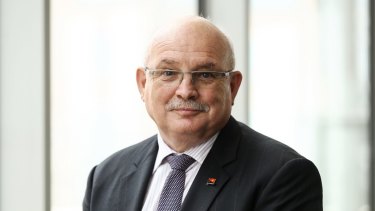
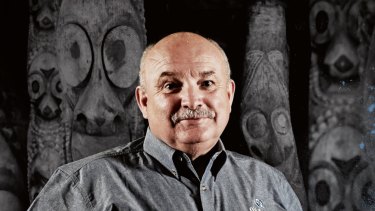
Caroline Evari: ‘Choose to rise above every circumstance….’

Caroline Evari
Caroline Evari
Betty Wakia (2)
Betty Wakia
BETTY WAKIA
BETTY WAKIA: Why did you decide to call your recently published collection of poems, ‘Nanu Sina’?
CAROLINE EVARI: ‘Nanu Sina’ simply means ‘my words’. I chose this title because, as you read through the book, you will notice most of the poems are basically my own thoughts related to my personal experiences and observations.
BETTY: Can you tell us what sort of poems are in this book?
CAROLINE: The book is divided into four parts - Conflicts, Relationships, Hope and Family. In each, you will find poems that resonate with the theme. For example, under Conflict, you find poems that talk about war, doubt and fear and under Relationships there are poems about love and friendship.
BETTY: How did your environment and upbringing colour you’re writing?
CAROLINE: Both have had a huge impact on my writing. Growing up, I never openly shared my challenges with the people around me. Because most of the poems have been extracted from my Grades 11 and 12 school journals, they are basically my way of expressing my fear, disappointments, hopes and dreams for an envisioned future. My journal was a place for me to confide in, so I wrote and wrote without stopping because I found writing a way of relieving stress.

BETTY: Give us an interesting fun fact about the book.
CAROLINE: Most of the poems are a misrepresentation of who I am today. You will find me writing a lot of uplifting poems in contrast with what’s found in the book.
BETTY: How many drafts did your book go through before publication?
CAROLINE: This book went through five drafts.
BETTY: And how long did it take to write?
Caroline: Most of my poems were written in 2008-09 when I was in secondary school. I started compiling them electronically from 2014–15. So, it took me approximately 11 years.
BETTY: What is your work schedule like when you’re writing?
CAROLINE: I don’t have a schedule for writing poetry. I write whenever a phrase or a sentence pops into my mind. I note it on a piece of paper or in a book. I might even open a separate word document and jot down thoughts throughout the day. I guess that’s the beauty of poetry, you don’t have to necessarily schedule a time to write.
BETTY: How did the book get published?
CAROLINE: I contacted Jordan Dean at JDT Publications and he helped me publish the book.
BETTY: Where do you get your information and ideas?
CAROLINE: The beauty about poetry is that you don’t really need to think hard about writing, you just need to use your emotions – it’s about using your full five senses. My inspiration comes from my surrounding and through observation. I write better when I can feel emotion and the book is made up of these expressions.
BETTY: How many books have you written? Which is your favorite and why?
ZukiCAROLINE: So far, I have written four books, this poetry collection and and three children’s books. The story books have been published by Library for All and, as an author, I contribute by writing stories which they pay for, develop into picture books and publish for distribution in the remote areas of Papua New Guinea. I am still waiting to hear if my other stories have been developed into picture books. My favorite book is ‘Zuki the Crocodile’ because that was my first children’s story that got accepted by Library for All and has been developed into a picture book. It’s also available on Amazon.
BETTY: Did publishing your first book change your process of writing?
CAROLINE: It gave me a whole new perspective on writing. I try to brainstorm around new topics or projects to work on and think about how I could develop myself at a more professional level.
BETTY: What was one of the most surprising things you learned in creating your books?
CAROLINE: One surprising thing is the support I receive from friends and family members and the impact my writing has created. This is a driving force for me to do better.
BETTY: Do you hear from readers much? What kinds of things do they say?
CAROLINE: One reader was able to relate to the poems which also brought back to her a memory of a poem I had completely forgotten which I wrote and read at her brother’s funeral. A colleague of mine pointed out that most of the poems depict sorrow and grief and saw that was me expressing myself. He was very impressed with the book. Another colleague said her daughters seem to enjoy the poems and every night, before going to bed, they read at least two. She says they are now beginning to gain interest in poetry.
BETTY: Are there any current projects you’re undertaking?
CAROLINE: I have a good number of children’s stories I wrote for Library for All which they turned down after their reviewing process, so one of my major aim is try and work with an illustrator to develop them into picture books. Secondly, I have an incomplete pile of positive quotes, thoughts and poems which I am hoping to complete and publish. I do not have a timeline for this.
BETTY: How do you market and promote your books?
CAROLINE: My current platforms are Instagram, Facebook and Wordpress. I am also in the process of developing a media release to run on PNG Attitude. I am using Rashmii’s mentorship in this project and it has been good so far.
BETTY: Can you share with us the best way to reach you and where to learn more about your books?
CAROLINE: ‘Nanu Sina’ is available on Amazon for anyone who can buy online. For those within PNG, you can reach me on Facebook or by email caroline.evari@gmail.com
BETTY: What other authors are you friends with and how do they help you become a better writer?
CAROLINE: Rashmii Amoah Bell since I connected with her through the My Walk to Equality Project until to date. Jordan Dean – since the day I followed him on Facebook. Baka Bina - whose kind words towards my work really motivated me to publish a book. I am also a member of writer groups on Facebook, this is where I learn and try to collaborate with other writers. I also follow other writers’ blogs and Instagram, this is how I learn.
BETTY: Do you have any suggestions to help others become a better writer?
CAROLINE: I believe the best way to become better is to be determined to be better. And by being determined, you will begin to do things to improve yourself, such as doing research, approaching the right people, facing your fears and taking risks. Being determined also enables you to not stop until you have reached your goal.  
BETTY: As a Papua New Guinean female writer and author what do you want to see and achieve in the next five to 10 years?
Caroline: Write more than 10 books and explore other genres. I see myself publishing more children’s story books. I would also like to see a ripple effect being created by this achievement and have a solid platform in place for forthcoming Papua New Guinean writers.
BETTY: What is your advice for women who want to publish their own book?
CAROLINE: Nothing must ever stop you from achieving your dream. The only way to be heard or be recognised is when you choose to rise above every circumstance and fight fiercely until you reach the frontline. It may never be easy for a woman, but what makes you think it’s easy for a man? Self-determination and discipline is the only difference.

How Susan graduated after a 34 year fight to get a degree


Susan Wangjil and her father on campusNewly graduated Susan Wangjil with her father on the campus of the University of Papua New Guinea
By IVAN DOA - PNG Attitude
PORT MORESBY - It was a great relief when Susan Wangjil finally graduated with a science degree after 34 years of continuous education.
Susan is from Alkena village in the Tambul District of the Western Highlands Province and she graduated as a Bachelor of Science, majoring in biology, from the University of Papua New Guinea on 26 April.
She had started Grade 1 at Alkena Lutheran Community school back in 1986, and in 1995 completed Grade 10 at Tambul High School. But she did not receive an offer to progress to the next level of education.
Susan had no choice but to return to her family where she stayed for a year and said to herself that completing Grade 10 should not be the end of her education.
So, in 1997, she decided to enrol at the Mount Hagen College of Distance Education to improve her Grade 10 marks. The following year, she was accepted into Nazarene School of Nursing at Kudjip in Jiwaka Province.
But, in her second year, she encountered serious family issues which forced her to abort her studies and return home to her family.
She then felt she had no hope. Her choice was to marry and start her own family. So, in 2003, she married James, a fine young man. Together they started a small bus business. At its peak, they owned three buses and everything was going well for them.
However, Susan began encountering difficulties in her marriage. It started when James was not transparent about the management of revenues from the bus business.
“James did not look after me and the two little kids properly. He ignored us and I noticed he had made up his mind to marry again,” Susan said.
“I knew nobody would look after me and my two little children so I started making crazy plans about how I would sustain myself and the kids. I had no choice in that terrible situation. I firmly believed that my only way to live a better life in the future would be through education alone”.
Susan Wangjil with her degree
Susan Wangjil BSc
So Susan decided to enrol herself at the University of Papua New Guinea’s Mt Hagen Open College where she successfully completed Grades 11 and 12. But she struggled financially to take care of her education, herself and the two children.
“Being a mother and student at the same time was not easy. My second born son disturbed my studies. I couldn’t concentrate on my assignments when he cried. I would breastfeed him and take him around just to calm him down while reading text books and handouts.”
In order to sustain herself and her children, she started selling doughnuts at the market. She would wake up at two o’clock every morning and bake doughnuts. While baking she would pray, read the Bible and study. Around six o’clock, she would sell the doughnuts before going to classes.
Susan carefully managed the proceeds from doughnut sales. She set aside the principal to buy new stock and with the profit bought course books and other things necessary for her studies.
James was not willing to support her education and she fended for herself with the little income she managed to receive from doughnut sales. Luckily, her elder brother helped by providing accommodation and food, which made life easier.
Despite the problems she faced, Susan was determined to pursue her education. “I prayed hard and had great faith that one fine day my dreams would come to fruition.”
God heard her prayers and honoured her faith. By 2010 she had successfully completed her Grade 11 and 12 courses.
Susan then applied to many universities around the country. Her first choice was UPNG, where she was accepted to study foundation science at the UPNG Open College in Port Moresby.
While studying, God made a way for her and she joined the Business and Professional Women’s Association. BPWA helped her with K1 thousand each year of her studies.
Her brother was another major supporter and he sponsored her during her time at UPNG.
“Being an unemployed mother and student at the same time was very hard for me. God’s grace has made my life easier and possible during those difficult times. All I can say is 'Thank you God'.”
Susan completed the courses at the Open College in 2015, she applied to study medicine but was not able to score the required GPA. However, she was accepted to study Biology.
In her second year, she was excluded from studies for one semester but reapplied in 2016 and was able to graduate with degree in Biology in April.
All the struggles, pain and difficulties had not restrained her. At last, she had graduated. “By the time I saw my name on the graduation list, the burden I had been carrying for a lifetime lifted and I was relieved and exited.”
Ivan Kupo Doa
Journalism student Ivan Kupo Doa
Susan now encourages others never to give up when they see challenges and difficulties ahead of them.
“If you see that nobody is willing and able to support your education, never lose hope,” she said.
“God has blessed us in many ways. Consider fending for yourself in some other little ways. For myself, I sold doughnuts at the market every morning in order to support my education.”
Ivan Doa is a third year journalism student at the University of Papua New Guinea


Go to this link for more: https://asopa.typepad.com/asopa_people/2019/05/how-susan-graduated-after-a-34-years-fight-to-get-an-education.html

Friday, May 17, 2019

Tahina Booth & the healing power of rugby league

Tahina Booth in full cry against the Jillaroos (Nathan Hopkins NRL)


MARY KONSTANTOPOULOS | NRL.com
SYDNEY - For Tahina Booth, having the opportunity to play for the Cronulla Sharks in this year’s Harvey Norman Women’s Premiership has been a game-changer.
Tahina only recently returned to the game after some time away and is enjoying playing alongside some of the biggest names in women’s rugby league.
"When Ruan Sims speaks, I am just in awe. I am a low-key fan girl. I feel the same way about Corban McGregor. I love the team and I love the culture," she said.
Whilst Tahina may be in awe of her team-mates, she hasn’t had the opportunity to share her personal story with them. Undoubtedly, if the rest of the team knew that story, they would be low-key fan-girling about her, too.
Tahina grew up in Papua New Guinea and has a deep personal understanding about the levels of gender inequality that exist there.
She was raped at age seven by a person known to her family. She was told that if she told anyone what had happened, they would kill her family.
Out of love for her family and fear of the consequences, Tahina kept this a secret until she was 18.
It was then that she began to comprehend that the depression and anxiety she was experiencing was a result of that trauma suffered as a child.
From that moment, Tahina could begin to get the healing she needed, and sport played a huge role.
"As the years went by, I used sport and the power of sport to take control of my body, to find my voice and to say that I matter," Tahina said.
"What those people did to me is not going to break my spirit. I am where I am today because of sport."
As a teenager, Tahina participated in athletics, basketball, tennis, surfboat rowing, gridiron and rugby league. But it was when she was competing for Papua New Guinea in powerlifting at the South Pacific Games that Tahina realised she could have an even greater impact.
"On the day of competition, out of the 50 athletes competing, I was the only one with all the correct gear, because I was sponsored," she said.
"There were all these incredible athletes getting disqualified because they were sharing uniforms and gear and consequently being timed out because they weren’t changing fast enough.
"So I went back to Australia and asked my social media following if they had any gear to give, because I could hand it directly to the athletes. The post went viral. I thought I would have to organise excess baggage, instead I had to order a shipping container."
The Grass Skirts Project was born and has now grown into an organisation that looks to help create the cultural and societal change in Papua New Guinea necessary to improve the status and health of women through sport.
One of the most successful programs run by GSP was the Hevea Cup Carnival and Wellness Expo which was launched on International Women’s Day in Port Moresby.
The idea was to connect people in PNG with specialist Non-Governmental Organisations that promote health and well-being.
A total of 24 teams competed - 12 men’s teams and 12 women’s teams - while 20 NGOs were also invited to host stalls.
When Tahina arrived at 6.30am to begin setting up, there was a group of 200 women waiting to enter. They were all waiting to hear from Marie Stopes about cervical cancer screenings.
"In Papua New Guinea we need to be engaging more with sporting events to deliver health initiatives," Tahina said.
"My goal is for the Hevea Cup to be rolled out nationally, because it is in the rural communities that we have the greatest power to effect change."
You can see that change in rugby league particularly, which is Papua New Guinea’s national sport.
Tahina has been part of the Papua New Guinea Orchids since their second year.
After the Orchids hosted the Jillaroos in 2018, one of Tahina's team-mates told her she didn’t want to take part in a lap of honour because the last time they had played at home, a year earlier, people were spitting at them and throwing empty cans at them.
Tahina took that young woman’s hand to support her during the lap of honour. But instead of directing vitriol, people were applauding and asking for autographs.
All this in just 12 months. But Tahina recognises there is still plenty of work to do.
"Women can contribute to society in a meaningful way and I can have a role in changing people’s perceptions, especially in rural communities about the role women can play in developing our society for the better," she said.

Wednesday, May 15, 2019

Komo youth drop guns & knives to pick up a rugby ball

Komo footballers

By EMMANUEL NAROKOBI - PNG Attitude

PORT MORESBY - After six years of tribal fighting, the youth of Komo in Hela Province have taken it upon themselves to reject violence and start the first ever rugby competition.
“We started this about six weeks ago,” said Dr Michael Mai patron of the Komo Rugby Football League Association (KRL) at the official launch last month.
“This is history in the making, a dawn of a new day for this electorate.
“As we are all aware this place was once a no go zone. Komo was a ghost town with no activity except for security vehicles driving up and down the roads.”
Seeing that the youths were being drawn into tribal fighting and substance abuse, KRL chairman Morris Edwin teamed up with Dr Mai to trial 10 teams in a Christmas touch football game.
The results were very successful and a proper competition has now been established to cater for the rapidly growing interest.
Morris Edwin worked hard to bring KRL to life and, in an emotional speech, KRL chairman, thanked religious groups for their prayers, Dr Mai and his team and ExxonMobil for supporting efforts to launch the ground-breaking sports event.
Mr Edwin set up 10 clubs in the men’s competition, six teams in the women’s touch competition and two Under 10 teams.
ExxonMobil PNG is working with the PNG Rugby Football League to host a coaching clinic later this month.

Go tothis link for more: https://asopa.typepad.com/asopa_people/2019/05/komo-youth-drop-guns-knives-to-pick-up-rugby-ball.html

Friday, May 10, 2019

Oil Search signs multibillion-dollar PNG gas deal


Oil Search CEO Peter Botten said the deal will be a boon for Papua New Guinea, which has acquired a major share of the new LNG project.

By Cole Latimer - The Sydney Morning Herald 

Oil Search has signed an agreement with the Papua New Guinean government to develop a $US15 billion ($21 billion) gas field in the country.
The agreement allows Oil Search, and joint-venture partners Total, Papua New Guinean (PNG) national oil company Kumul Petroleum and ExxonMobil, to develop the Elk-Antelope and P’nyang gas fields off the country’s shores.
It could also support the construction of three more LNG processing trains to transform the extracted gas for export. Oil Search said the Elk-Antelope project could produce about 5.4 million tonnes of LNG a year.
The deal allows the development to progress to front-end engineering and design of its infrastructure.
A final investment decision for Elk-Antelope is slated for 2020, with first production expected by around 2024.
“This is a major milestone for the Papua LNG project,” Oil Search chief executive Peter Botten said.
The agreement also gives the PNG government a 22.5 per cent share in the project, with about 2 per cent being held by local landowners.
“We believe the fiscal and other terms of the gas agreement equitably allocate project benefits and returns to the state,” he said.
A key point of the deal was securing domestic supply for PNG, to help the nation achieve its target of supplying 70 per cent of the country with electricity by 2030.
Kumul Petroleum said the agreement could also allow the new project to share infrastructure with the existing PNG LNG project, operated by ExxonMobil, Total, Oil Search and Santos.
“This will avoid any unnecessary duplication in construction as recently seen in Gladstone on the Australian east coast, where three identical independent downstream facilities were built next to each other, vastly increasing their overall cost and reducing the tax revenues,” Kumul said in a company statement.
Oil Search’s share price jumped 2.5 per cent to $8.16 by 3.50 pm Sydney time.

Oil Search CEO focuses on mending fences as tenure ends

The search for Peter Botten's replacement at the PNG focused oil and gas company is well underway.

By Cole Latimer - The Sydney Moring Herald


Energy company Oil Search chief executive Peter Botten says the industry must support social projects in Papua New Guinea as the country faces high unemployment and political turmoil.
His comments came as the PNG-based company says it is "well advanced" to find a replacement for Mr Botten, who has led the 90-year-old company for 25 years.
Speaking at Oil Search's annual general meeting in Port Moresby, PNG on Friday, Mr Botten said PNG is facing the combination of a young population - up to two-thirds under 20 in some regions - and high unemployment.
Oil Search chairman Rick Lee said the hunt for a new CEO was “well advanced”.
“A management reorganisation and corporate restructure has commenced...to deliver our ambitious growth objectives,” Mr Lee said.
“As part of this process, the board is well advanced on managing the succession plan for managing director, Peter Botten, who has led Oil Search very successfully for more than 25 years.”
While the company has not named potential successors, analysts said Keiran Wulff, Oil Search’s Alaskan project head, was the most likely replacement.
Mr Wulff worked for Oil Search between 1993 and 2008, as the chief operating officer. He rejoined the company in 2015 and was appointed the president of its Alaskan operations in 2018.
The change in management at the comes as the Papua New Guinean government has also faced major upheaval after an attempt to oust sitting PNG Prime Minister Peter O’Neill.

Oil Search's Alaskan asset president Keiran Wulff has been tipped as likely to replace Mr Botten.
Oil Search's Alaskan asset president Keiran Wulff has been tipped as likely to replace Mr Botten.CREDIT:NINE

During the meeting, Mr Lee outlined Oil Search’s progression of its $US15 billion Elk-Antelope and P’nyang gas fields off the country’s shores.
He said the development of these projects was moving swiftly towards a final investment decision by 2024, following the signing of an agreement with the PNG government.
However, concerns for the future of these gas developments were raised earlier this month as a potential regime change loomed in the country.
Rebel MPs, led by former PNG Finance Minister James Marape, attempted to oust Mr O’Neill over claims of financial mismanagement and called for changes to resource laws, which could negate the deal signed with Oil Search.
“A key focus area is on ensuring that there is transparency around the millions of dollars in royalties, taxes, levies and other fees and charges we pay to governments,” Mr Lee said.
He said the company was pushing the PNG government for greater transparency on the payment of royalties to traditional landowners.
“While there is still room for improvement, we have been very pleased with PNG’s progress towards compliance over the past few years.”
At Oil Search’s previous AGM in 2018, Mr Botten blamed the government for failing to distribute royalties to landowners.
Lowy Institute think tank's PNG analyst Shane McLeod said Mr Marape had raised the issue of royalties and benefits multiple times on social media, focusing on the Hela Province.
However, he downplayed concerns over the future of Oil Search's projects if there were a change of government.
"Oil Search is probably better than anyone else there in its relationships with landowners, they make a big effort to be engaged," Mr McLeod said.
"While politics may raise fears, their relationship is in good health with local landowners."
Oil Search's share price closed trading up 0.2 l per cent to $7.59 on Friday.


Featured Post

Cashless in China as I study for my PhD

                                WeChat and Alipay digital payment applications By BETTY GABRIEL WAKIA - posted on PNG Attitude Blog PORT MOR...