Tuesday, July 9, 2019

US$13bil Gas Deal


By GYNNIE KERO and JEFFREY ELAPA - The National

AN agreement expected to be signed today on the US$13 billion (K43 billion) Papua LNG project focuses mostly on the share percentages for the State, developer and provincial governments, Petroleum Minister Fabian Pok says.
He told The National that after the signing, French developer Total could then go to the financial institutions to raise funds for its investment in the project.
“This is (only) an agreement on what percentage shares to take, what per cent of benefits goes to the State, the developer and the provincial governments,” he said.
Representatives of the Gulf provincial and district administrations, the developer and the State were at Government House yesterday for the signing. But they were informed it would be held today.
Pok said the signing was only the start of the process, and there were other processes to go through before a petroleum development licence was issued.
“The most important document that gives rise to the development of the project is the petroleum development licence which will be issued later,” he said.
He said a pre-development licence would be sought to build a conditioning plant and other facilities.
The signing of a memorandum of understanding between the Government, Total, Oil Search and ExxonMobil last November marked the start of negotiations on the gas agreement.
Prime Minister Peter O’Neill told an energy summit in Port Moresby last month that the Papua LNG project would be one of the biggest investments in the country.
He said the Government would deliver a dedicated national content and some gas would be reserved for domestic market obligations.
Under the national content guidelines, he said the Government must ensure that local companies continued to be given opportunities to participate in the development of projects.
O’Neill had said the domestic market obligation would be a key condition for resources development in the country. “The petroleum and energy sector looks very bright in PNG,” O’Neill said.
The Papua LNG project will develop the Elk Antelope gas fields which is expected to produce close to 2.7 million metric tonnes per annum.
“We are trying to conclude with a win-win agreement for our developers and our people,” O’Neill said.

Go to this link for more: https://www.thenational.com.pg/us13bil-gas-deal/

See who I met at Grand Papua Hotel - & some thoughts I had

Daniel and Keith
Daniel and Keith with copy of Survivor and traditional Enga caps
By DANIEL KUMBON - PNG Attitude
PORT MORESBY – We had quite a lunch at the Grand Papua on Friday.
By ‘we’ I mean Keith Jackson AM, who wrote the Foreword to my latest book ‘Survivor’, his lovely wife Cr Ingrid Jackson, a councillor in the shire of Noosa on Australia’s Sunshine Coast, and their son Ben, a communications specialist working with the Australian aid program in Papua New Guinea.
After we finished, the Jackson family met Hon Wera Mori, commerce minister and member for Chuave in Simbu, where Keith had come as an 18-year old to teach - and has remained a friend of PNG ever since.
Wera and Keith exchanged contact details and spoke for many minutes.
(As it happened Wera had been a student at a school at which Keith’s close friend Murray Bladwell had been principal and Keith was able to put them in touch after 50 years.)

Daniel and Bryan
Daniel and political mover and shaker Bryan Kramer MP
Keith and I also met my ‘Facebook Warrior’, Hon Bryan Kramer. It was an honour to meet the fiery member for Madang who had made it possible for PNG’s new prime minister Hon James Marape to ascend to power just on Thursday.
At that very minute Marape was upstairs on the 15th Floor of the Grand Papua forming a caretaker government.
Another surprise for me was meeting my own Kandep MP, Hon Alfred Manase, as I was in the hotel lobby. The moment our eyes met he greeted me warmly and we took photos.
We are family, it was impossible to ignore. We are all linked one way or another, even to Don Polye’s Gini village in Kandep.
This thing called ‘politics’ must not be seen as a weapon to separate or attack people and turn them into enemies.
Argue only against policy issues which you don’t like.
And this must be borne in mind by supporters on both sides who abuse Facebook to launch personal attacks on behalf of our leaders.
They go to the extreme of swearing at each other while hiding behind fake names.
Remember, we will continue to use the Kandep-Mendi Highway which Don Polye built.
We will continue to take medicine at the Kandep Hospital that Alfred Manase has maintained and where an ambulance was delivered recently.
Kandepion people must drop their negative attitudes and learn to leave politics to the politicians.
You never know, they could be wining and dining somewhere when you continue to live with your hatred and resentment for the rest of your life with only your shadow following you around.

Go to this link for more: https://asopa.typepad.com/asopa_people/2019/06/see-who-i-met-at-the-grand-papua-hotel-what-thoughts-i-had.html

Taking risks – is this a good thing or a bad thing?


Alphonse Huvi
Alphonse Huvi - "We have the choice of putting those doubts where they belong  - out of the way"
By ALPHONSE HUVI - PNG Attitude
TINPUTZ - The meaning of the word ‘risk’ is the possibility that something bad may happen.  As in, ‘it’s a risk’.
Author Mike Murdock has written that “most people choose to sit as spectators in the game of life rather than risk the arena of conflict to wear the crown of victory.”
I guess it comes back to each individual as to whether one is willing to take the risk of pursuing something they’re interested in and capable of doing.
So many times we ask ourselves a question starting with, ‘What if…’?
What if I do this and others think badly of me?
What if I do that and others disapprove?
What if I do the other and create enemies?
The ‘what if’ question troubles many people because it expresses the fear of facing the challenges that lie ahead.
We seem to allow low self-esteem to rule rather than tell ourselves we are capable of doing something.
We do have the choice of putting those doubts where they belong  - out of the way.
So taking risks can offer us benefits to enjoy. However, it also has the disadvantage that things may not go as we want. Then we have to face the consequences.
Of course, if we consider first what those consequences might be, and take steps to avoid them, we are better prepared to overcome the risks.
It comes back to making good choices. We make wise decisions and are likely to reap from them if we minimise the risk.
So taking a well thought-through risk can be beneficial.
So why are some people risk takers and other people not?
I don’t know. I guess it depends on who we are and what we’re prepared to do.
And on how carefully we work out what the risks might be, and how we can avoid them.

Go to this link for more: https://asopa.typepad.com/asopa_people/2019/07/taking-risks-is-this-a-good-thing-or-a-bad-thing.html

PNG's East Sepik province goes plastic-free

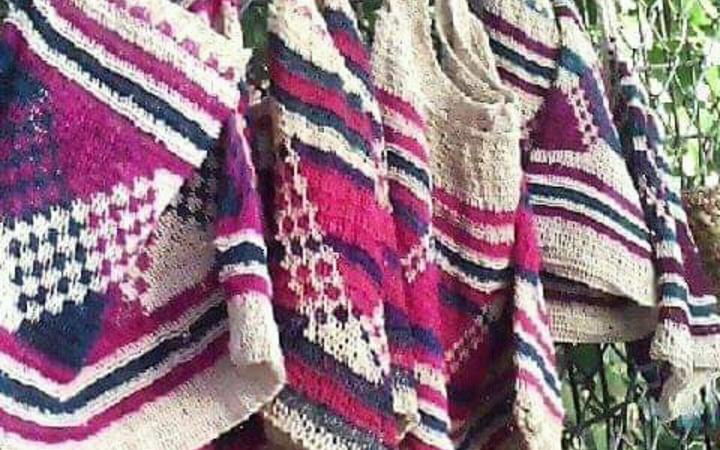
Papua New Guinea bilums

Posted by Radio New Zealand

East Sepik's executive council in Papua New Guinea has declared the province is going plastic-free.
The provincial administrator, Clement Malau, said they want to encourage local small businesses to promote the use of Sepik bilums.
Dr Malua said there is still a lot of work to be done but the provincial leaders believe they are taking the right approach to protecting the environment, while also engaging with those local people who make bilums and baskets.

Women’s road to parliament can start with 50% of the bureaucracy


Tanya Zeriga-Alone
Tanya Zeriga Alone - "Hard to change men stuck in a culture that dictates women have no space in decision-making"
TANYA ZERIGA ALONE | Em Nau PNG Blog
PORT MORESBY - It was just 80 years ago that the hausman [men’s house] ruled.
Some of those men have just transitioned from the village hausman to the national hausman, also known as our parliament.
In Papua New Guinea’s paternalistic society, no woman sits in the hausman with the men.
This current generation of women is just one generation removed from PNG’s cultural past, and women in this age and time are still bound to the cultural roles of women, no matter how educated they are.
It is hard to fix culturally indoctrinated women and men. The present push to get women into parliament has never worked in the past – it is hard to liberate women who still live beneath the shadows of a culture of deferral to men.
It is hard to change men who are still stuck in a culture that dictates that women have no space in decision-making.
Our hope for change is in the next generation. Our hope rests on our girls and boys.
The real measure of an equal society is when girls can go to school and have same privileges as boys: when young women can run for the office of student representative, the same as young men; when women can stand up and speak their minds at a big meeting.
The strategy going forward must be to build confident girls who are assertive; while at the same time building confident boys who accept that women are as good at leading as boys are.
In time, confident boys and girls will transition into confident adults and function in an environment where women are judged on their leadership potential and not on their gender. That is the transition we should be pushing for as a 15-20 year strategy.
An immediate activity that may fast-track positive change right now is that the parliament, by law, should ensure that half of the senior, decision-making bureaucrats’ positions go to women.
In government, the rubber hits the road at the bureaucratic level not in politics. Politicians tend to be rubber stamps. The real decisions-makers and implementers of government programs are in the bureaucracy.
When a woman is in a decision making role, she will be inclusive - that’s a women’s trait. After all we run households and we are aware of and cater for all the people in our households.
Even if parliament is 100% men, decision-makers including 50% woman will be more considerate of the plight of women.
Women bureaucrats can change the society in five years; we don’t have to wait for 20.
And in time, it will be easier for a senior woman bureaucrat to transition to parliament because she will be good in what she is doing and she will know the working of the government.
She will have the respect of her male colleagues and she will be confident in her wisdom and knowledge.

Go to this link for more: https://asopa.typepad.com/asopa_people/2019/07/womens-road-to-parliament-can-start-with-50-of-the-bureaucracy.html

Take back PNGSDP’s emperor clothes for PNG & Western Province


Community leaders sign the Community Mine Continuation Agreement  giving up rights to claim compensation from Ok Tedi Mining
Community leaders sign an agreement giving up their rights to claim compensation from Ok Tedi Mining
MARTYN NAMORONG | Namorong Report
PORT MORESBY - Treasurer Sam Basil’s recent economic update has highlighted serious cash flow issues for the Papua New Guinea government as it struggles to deliver the 2019 budget.
As Basil himself highlighted, the collection of corporate income tax, goods and services tax and departmental fees are all below target.
Prime minister James Marape recognises the dire predicament his government faces and so it was unsurprising that his first overseas trip was to Singapore to meet with the Board of the PNG Sustainable Development Program (PNGSDP).
PNGSDP is an independent entity, a status clarified by a recent ruling by the courts in Singapore.
It was born out of an arrangement where Broken Hill Propriety (BHP), now BHP Billiton, was offered immunity from legal liability for environmental damage created by Ok Tedi Mining Limited (OTML).
The arrangement involved BHP shares in OTML being transferred to PNGSDPL.
The deal that led to this was essentially to make PNGSDP responsible for covering successful claims against OTML for environmental damage. PNGSDP also indemnified the PNG government and BHP from any such claims.
Being an indemnity fund it needed to be created to be independent so as to be out of reach of both culpable parties while providing them with protection from future claims.
In others words PNGSDP is primarily an insurance policy and not a development fund. Development spending came as an afterthought from the primary objective of indemnifying GoPNG and BHP.
Thus PNGSDP is bit of a misnomer; it should probably be called the GoPNG-BHP Indemnity Fund.
The fact that OTML initially compensated 156 communities is recognition of legal liability for environmental damage.
Had the 157th community of Sepe-Auti stuck to its guns and prosecuted for favourable damage claims, it may have got a better deal than it did.
Instead, in 2012, it was shoved into the so-called Mine Life Extension (MLE) deal under which it is currently accommodated by as signatories to what is known as the Community Mine Continuation Agreement (CMCA) extension agreement.
When the O’Neill government expropriated PNGSDP’s stake in OTML in 2013 and opened the door to claims against OTML for damages, PNGSDP - as the indemnity fund – was obliged to protect the funds by withdrawing from PNG jurisdiction.
Whilst the rhetoric from O’Neill was that BHP’s immunity was removed, ironically the PNG government, as a shareholder of OTML, was also exposed to claims against it.
Now the cash-strapped Marape government wants to ‘Take Back PNG’ an opportunity exists to strike a new deal that ensures that both the government and the people of Western Province benefit.
Whilst PNGSDP is an independent entity, it is still governed by its programs rules, which dictate how it operates. The rules state that one-third of PNGSDP funds are to be applied for the benefit of PNG and the other two-thirds for the benefit of Western Province.
I am aware that PNG and Western Province leaders are currently seeking to negotiate how those funds are applied.
My advice to the prime minister and the Western Province leaders is that they first need to recognise the beast for what it is and give the beast what it needs — indemnity protection.
Once immunity is awarded to OTML and by extension BHP and the PNG government, I believe one-third of the funds should be disbursed in direct budget support to the PNG government and two-thirds to the Western Province.
The Western Province funds should be further disbursed in equal 20% amounts to Fly River Provincial Government, North Fly District Development Authority, Middle Fly District Development Authority, South Fly District Development Authority and to CMCA communities.
This latter amount should be managed by a new entity genuinely owned by the communities and not the elephants at the Ok Tedi Development Foundation (OTDF) who have failed the people for over a decade.
PNGSDP should stop pretending to be a development program and be honest to the people of Papua New Guinea and Western Province as to what kind of monster it truly is.
The Singapore Courts have already removed its clothes and revealed the naked truth about its true identity.
As BHP-Billiton bosses and Australians on the PNGSDP Board would recognise, it’s time for PNGSDP to be ‘fair dinkum’ with the Papuans of New Guinea.
PNGSDP’s role should be as the funder as it was originally created as an independent insurance fund and not a development program.
Its funds should be applied to improve governance and enhance the capacity of national and sub-national government entities to do their job — which is to deliver public goods and services to the people of Papua New Guinea and Western Province in particular.

Go to this link for more: https://asopa.typepad.com/asopa_people/2019/07/take-back-pngsdps-emperor-clothes-for-png-western-province.html

Crocodile Prize launches 2019 short story and poetry contests


2017 awards
The last Crocodile Prize awards in 2017 were hosted by writer Martyn Namorong, himself one of the first award winners in 2011
By KEITH JACKSON - PNG Attitude
PORT MORESBY – Poets and short story writers can fire up their computers and blow the dust off their notebooks now that Crocodile Prizeorganisers have announced the launch of the 2019 awards in both these important genres of writing in Papua New Guinea.
Both awards have a tight deadline for entries of Saturday 31 August and offer large cash prizes as well as publication in the prestigious 2019 Crocodile Prize Anthology.
The winning short story will be awarded to the best original, narrative-based prose by a Papua New Guinean author.
There no strict word limit but judging will be based on quality ahead of quantity.
Contest organisers say creativity and originality are important and highly considered will be the relevance of the perspectives presented as well as style, coherence of ideas, form and structure.
Previous short story winners were Jeffrey Mani Febi (2011), Charlotte Vada (2012), Leonard Fong Roka (2013), Agnes Maineke (2014), Hazel Kutkue (2015) and Alison Kult (2016).
There was no short story award in 2017 and no Crocodile Prize contest in 2018.
The award for poetry is keenly contested and in previous years this category has always had by far the most entries.
Many exceptional poems have been written and judges have never found it easy to select the most outstanding.
Winners in previous years were Jimmy Drekore (2011), Michael Dom (2012), Lapieh Landu (2013), Diddie Kinamun Jackson (2014), Philip Kaua Gena (2015) and Wardley D Barry-Igivisa (2016) and Annie Dori (2017).

Go to this link for more: https://asopa.typepad.com/asopa_people/2019/07/crocodile-prize-launches-2019-short-story-and-poetry-contests.html

Featured Post

Cashless in China as I study for my PhD

                                WeChat and Alipay digital payment applications By BETTY GABRIEL WAKIA - posted on PNG Attitude Blog PORT MOR...