Wednesday, August 7, 2019

PNG asks China for free trade deal, and debt re-financing

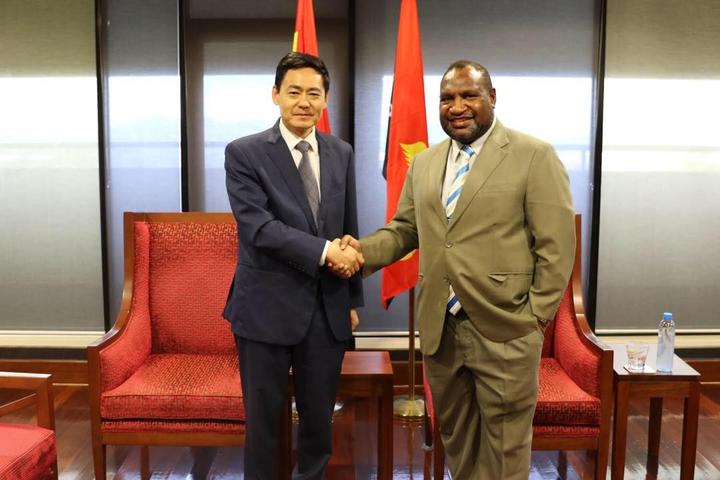
Papua New Guinea's prime minister James Marape meeting with China's Ambassador, Xue Bing, in Port Moresby. 6 August, 2019

Posted by Radio New Zealand

Papua New Guinea's prime minister has asked China to enter into a free trade agreement with his country, and for help in restructuring his government's debt.

PNG's requests came as James Marape met with China's Ambassador, Xue Bing, in Port Moresby. While the debt re-financing would first require consultations and collateral negotiations, PNG is pushing hard for a Free Trade Agreement in the hope it could be signed on an upcoming visit to Beijing by Mr Marape.
The prime minister suggested that if China opens up free trade with Pacific Island countries like his, it will help build thriving economic corridors in the region.
The new PNG leader is seeking to elevate the two countries' development cooperation, and boost Chinese investment in his country.
Mr Marape also requested China's assistance in re-financing PNG's US$7.7-billion debt.

Both the Bank of PNG and China's People's Bank are expected to consult with Papua New Guinea's Department of Treasury over the re-financing.
Mr Marape's discussions with China's ambassador also focussed on the upcoming 3rd China-Pacific Islands countries Economic Cooperation Forum to be held in Samoa in October, and the forthcoming Pacific Islands Forum meeting in Tuvalu, this month.
"I also suggested for Chinese investment in the Agriculture and Fisheries sector, and in particularly establishing down streaming processing plants for products in forestry, fisheries, mining and petroleum, and general food production and supply in PNG," Mr Marape said in a statement.
Ambassador Bing briefed Mr Marape on China's investments in PNG, the main two being the Ramu Nickel Project and the Porgera Gold Mine Project which Chinese companies are involved in.
In the case of the Ramu mine, the project is in the process of being extended
Mr Marape and Ambassador Bing also exchanged views on global food security and discussed views on entering into an Agricultural Cooperation Arrangement to supply PNG organic food and vegetables to the Chinese Market, as well as a Fisheries Agreement for Chinese investors to build fisheries processing plants in PNG.
Ambassador Bing extended an invitation for Mr Marape to visit China, with a proposed official trip expected to feature signing of Memorandums of Understanding and other technical agreements.
"These will include developments in the field of air services, tourism, mining and petroleum, electricity, construction of roads, ports, airstrips, technical and vocational education schools, and the Chinese language curriculum to be introduced in schools, and more importantly encouraging business investments from China," PM Marape said.

Go to this link for more: https://www.rnz.co.nz/international/pacific-news/396125/png-asks-china-for-free-trade-deal-and-debt-re-financing

China circles PNG amid debt blowout

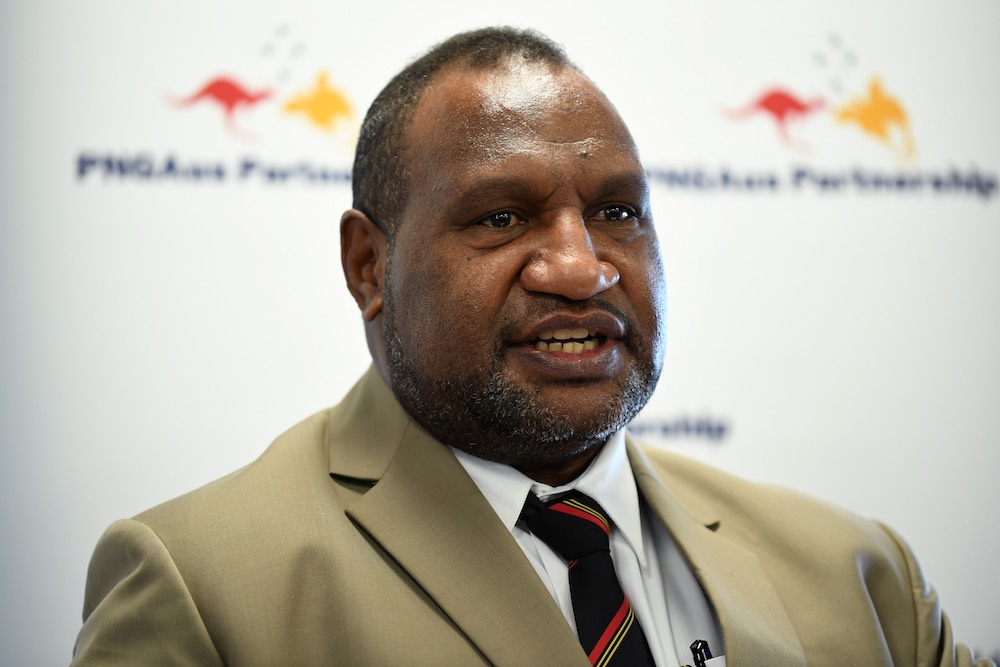
Papua New Guinea Prime Minister James Marap. Picture: AFP
By Ben Packham - The Australian

Papua New Guinea has asked China to refinance its entire government debt of $11.8 billion in an unprecedented move that could give Beijing huge leverage over Australia’s nearest neighbour.

PNG Prime Minister James Marape announced the request after a meeting yesterday with Chinese ambassador Xue Bing in Port Moresby — less than a fortnight after an official visit to Australi­a at the invitation of Scott Morrison, who has sought to counter rising Chinese influence across the region.

Mr Marape, who had vowed to “take back” PNG’s resource-rich economy from foreigners, would give a formal letter of request to the ambass­ador to convey to Beijing, his ­office said in a statement.

“(The Prime Minister) requested the ambassador to inform­ Beijing on a bid to assist the government of PNG refin­ance its existing country’s K27bn debt,” the statement said. “He suggested that both the Bank of PNG and the PRC ­People’s Bank will take the lead with the Department of Treasury in ensuring that consultations are under way.”

The statement said Mr Mar­ape had also requested China enter into a free-trade agreement with Pacific Island countries, and foreshadowed a state visit by Mr Marape to Beijing.

It said the visit would be combined­ with signing agreements and talks on future co-operation on a range of projects including ports and airstrips.

The Australian understands the Australian government was already in preliminary talks with PNG to help it avoid a looming “fiscal cliff”. This included an offer of help to put together a debt re­structur­ing plan funded by the International Monetary Fund.

International banking sources, who requested anonymity for fear of antagonising China, said Beijing was likely to require collater­al — such as a major resource­s project — in case PNG defaulted on the loan.

Other countries have had to hand over key assets after falling into Chinese “debt traps”, including Sri Lanka, which was forced to sign over the Port of Hambantota on a 99-year lease when it defaulte­d on a Chinese loan.

The Lowy Institute’s Pacific program director, Jonathan Pryke, said if the deal went through, “it would be of huge bene­fit to the cash-strapped governmen­t”, consolidating short-term and ­expensive loans and helping to ­alleviate foreign exchange ­pressures.

“The risk for the lender is that, without commitments to struct­ural reform, there is no guarantee that PNG would be able to pay back the debt now owed to them,” Mr Pryke said.

“China may look for other strategic or economic guarantees that would make the $US8bn liability more palatable, but as far as I know this would be new territory for them.”

PNG’s public debt, which stands at about 32.8 per cent of GDP, is expensive to service, with 10-year bonds paying about 12 per cent interest.

PNG owes China about $870 million, or about 7 per cent of government borrowings.

PNG’s government debt for last year came in at 26.9bn kina ($11.8bn), a legacy of the O’Neill government, which borrowed heavily during the boom years of 2012-14.

This included a $1.2bn loan from investment bank UBS to buy a 10 per cent stake in the ASX-listed Oil Search, which later tanked on falling oil prices and cost PNG an estimated $420m.

Pro-China PNG MP William Duma, a former minister who was sent to the backbench by Mr Marape, welcomed the Prime Minister’s decision to seek debt consolidation assistance from China.

“Our country’s future lies with China and the rest of Asia,” Mr Duma said.

“Asian countries, starting with China, do not worry about the size of a country or how wealthy it is, but they give prominence­ to people-to-people relationships.”

Go to this link for more: https://www.theaustralian.com.au/nation/politics/china-circles-png-amid-debt-blowout/news-story/a79709b361d5dfe80fd1226b9cd6a3a8

Tuesday, August 6, 2019

Huge loss at mine


By CLARISSA MOI - Posted on The National

ILLEGAL mining activities at the Porgera gold mine in Enga is costing the operator around K4.5 million a month, it has been revealed.
Barrick Gold Corporation president and chief executive officer Mark Bristow attributed the loss in revenue to “the traditional environment where the mine operates”.
“We deal with social crisis almost every day in Porgera,” Bristow said.
“So K4.5 million a month. Just think about it. That could be going to the community,” he said.
“Porgera is a critical component not only on the country’s revenue to date but because it’s real and it’s happening every day.
“It is a very important engine in the part of Papua New Guinea which is traditionally volatile.”
He estimates a loss of between US$800 million and USS1.5 billion (K2.65 billion and K5 billion) from the illegal activity.
He said Porgera was a large contributor to the Engan provincial economy and the PNG treasury.
“From the revenue created by Porgera, 48 per cent of every kina arrived either in the provincial purse, the national treasury purse, with the provincial governor or the landowners,” he said.
“And 52 per cent has arrived in the hands of the investors who continue to reinvest the money.”
Bristow said Porgera was one of the largest employers in the country with 3,100 workers, 1,000 of whom were from the Porgera region.
He said 900 employees were given opportunities to study overseas.
Meanwhile, acting managing director of the Mineral Resources Authority Philip Samar said earlier the Government was committed to addressing the issue of illegal mining at Porgera.
He was responding to concerns raised by the Porgera Joint Venture (PJV) that there had been a huge increase in the number of illegal miners who had access to the stockpiles and open pit area, putting their own lives and the lives of company employees at risk.
The activities resulted in the loss of lives and injuries to illegal miners and employees.
A team of government officials, including Mineral Resources Authority officers, were sent to the mine site to reassess the illegal mining situation.
He said the situation had escalated “such that the normal daily mine operations are being significantly hindered and the mine is not able to operate at its full production capacity”.
“Barrick has approached the Government to urgently provide assistance in resolving this law and order issue so that the mine can continue its normal operations,” he said.
“The company is concerned that at the rate and the manner at which illegal miners were operating, the mine could face serious problems including shutting down operations.”

Go to this link for more: https://www.thenational.com.pg/huge-loss-at-mine/

Commission ends contract worth K40,400 per month

By LUKE KAMA - Posted on The National

NATIONAL Procurement Commission (NPC) acting chief executive officer Simon Bole has put a stop to a contractor who had been providing pest control service to the commission for about K40,400 a month.
A senior officer from the commission, who was involved in facilitating the contract, has been suspended pending the outcome of an internal investigation that is underway before the matter can be referred to the police fraud squad.
Bole told The National in an exclusive interview that the management under the former Central Supply and Tenders Board (CSTB) entered into a contract with a company called Good Pest Management Ltd (GPML) to provide pest control and fumigation services at CSTB Haus in Port Moresby.
“The contractor was engaged during November last year, before I became the CEO, for around K40,425 per month or K485,100 per year,” Bole said.
He said until May, more than K202,000 was paid to the company.
“I discovered the contract arrangement when the claims for the month of April and May were submitted to my office for payment.
“I saw that the payment of K40,425 per month was a lot of money and I called my officers from the accounts division to provide contract documents so I could assess the validity and genuineness of the contract.
“I found that the contractor was engaged through questionable means and I put a stop to their payment, suspended one of the senior officers who facilitated the contract and ordered for an internal investigation and it is currently underway.”
According to records from the Investment Promotion Authority (IPA), GPML was officially registered with IPA on Dec 21, 2018.
The contract agreement was entered into on Nov 30, 2018, even before it was formally registered with IPA and awarded a contract of K40,425 per month or K485,100 per year.
Bole said he and the executive division of NPC were now voluntarily taking the responsibility of cleaning and fumigating and had spent around K660 to purchase chemicals and equipment.

PNG: making sense of a massacre

Image may contain: outdoor
By Watna Mori - The Interpreter

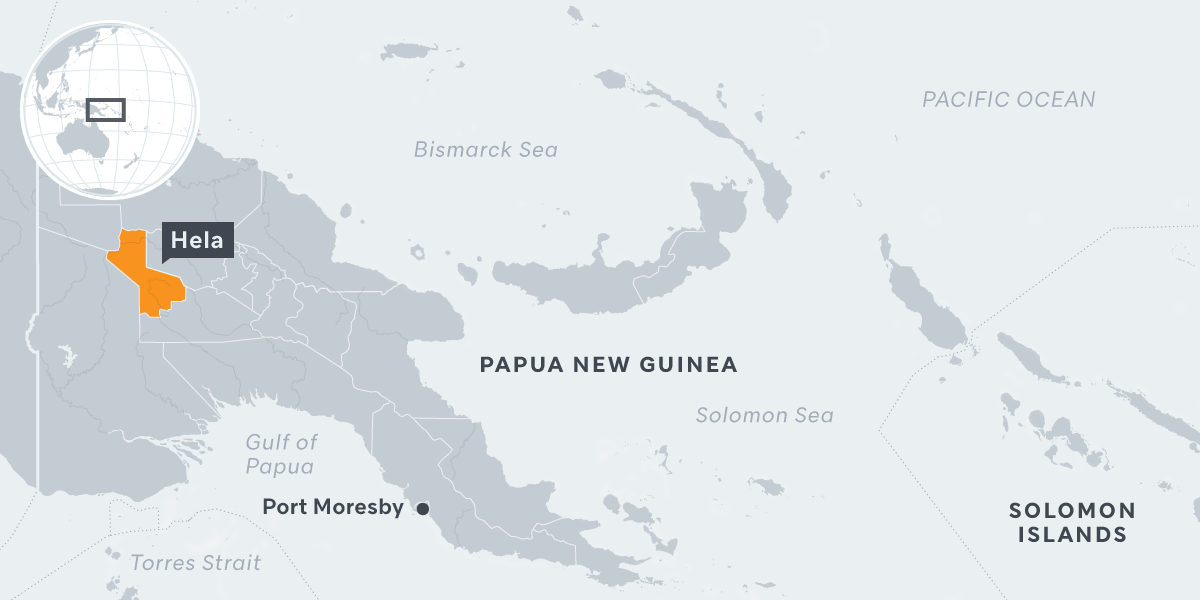
From the heights of political power to the depths of violence, Hela province follows a familiar path.
It wasn’t long ago that Hela Province, in Papua New Guinea’s southern highlands, wasn’t a province at all, and hardly attracted the attention of the outside world. Now in just a few short months, it has found itself very much in the spotlight.
The May election of James Marape as Prime Minister seemed to symbolise the rising fortunes of Hela, one of the most underdeveloped areas of the country. Marape, a long-serving member of parliament from Tari-Pori in Hela, came to office promising a new start.  
The gruesome massacre on 8 July of 18 women and children in Marape’s home electorate was a stark reminder that there is no escaping the past.
Several recent articles (from Scott WaideBenedict BrookNicole George and Jo Chandler) have identified contributing factors to this violence: tribal warfare, disputes over land and resources, the vulnerability of women, lack of government services, and the breakdown of traditional norms. These factors are all real and current, and yet a deeper issue goes beyond them and encapsulates many of the problems PNG has experienced for most of its 43 years of independence.
Hela has quickly risen to the heights of political power, and it has now seen one of the nation’s worst acts of violence. This contrast, while extreme, is not unique to Hela – it is an experience shared across PNG. The inundation by a foreign culture and its concepts of power and the pressure to cram thousands of years of understanding into mere decades have created an unpredictable environment, neither of the old nor of the new, nor even of a clear and discernible present.
Melanesians on the island of New Guinea are some of the longest-residing people in the world. The first inhabitants are estimated to have arrived 50,000 years ago. Nonetheless, PNG is still known to some as “the last frontier”, because it one of the last places to have made contact with the dominant Western world.
Some refer to PNG going straight from the stone age to the modern age, as illustrated by film documentation of Western “discovery” of the Highlands in the 1930s. Such descriptions, however, are the view through a Western lens. As Papua New Guineans know, and increased research shows, Melanesians both in New Guinea and its surrounding islands have traditional social and political cultures far more complex and sophisticated than the label “stone age” evokes.
The few books written by Papua New Guineans at that critical moment of change, both fiction and non-fiction, provide a deeper insight. This literature includes Sir Albert Maori Kiki’s Ten Thousand Years in a Lifetime, Sir Igantius Kilage’s My Mother Calls Me Yaltepand Sir Vincent Eri’s The Crocodile.
Kiki was a Papua New Guinean pathologist and politician, and his biography conveys the exhaustive and mind-boggling experience that was his life – and continues to be the lives of Papua New Guinean people: cramming 10,000 years into one lifetime.
The reality is that in two generations, PNG has shifted from traditional Melanesian lifestyles and thought to a completely foreign and equally complex Western culture, which itself continues to mutate at alarming speed. To add to the challenge, this introduction to the ways of the West has not progressed uniformly and gradually. The highlands were only opened up in the 1950s, and even in the 1970s, some parts were still not under administrative control of then-ruling Australia. By the time PNG obtained independence in 1975, it had a population of around 3 million people, but fewer than 10 had a tertiary education.


Papua New Guinea Prime Minister James Marape (Photo: Joel Carretta via Getty)
If the rest of PNG’s journey into the Western system has been a shove into the big blue without a life jacket, then places like Hela and the deep highlands of PNG have experienced an even bigger challenge. Hela was never given a chance to develop slowly into understanding the Western social and political system, neither by colonial powers nor successive PNG governments. Until 2010, it had very little exposure to the outside world. There was minimal development, and many residents moved to other parts of the country to access the cash economy.
The launch of the PNG-LNG project in 2010 placed Hela in the limelight for the first time. It was soon given provincial status, separating it from Southern Highlands Province. As predicted by some commentators, it also quickly gained political influence, culminating in the election in Parliament of James Marape as PM earlier this year.
Bernard Narokobi, a founding father of PNG and one of the Pacific’s best philosophical minds, warned of the dysfunction that would befall PNG if the nation failed to identify a cultural and development path for itself. In a series of articles published between 1976 and 1978, Narokobi spoke of the importance of recognising “The Melanesian Way”. He wrote of the trauma of external laws “steamrolling” Melanesian laws. He emphasised that to achieve equality and self-reliance, Papua New Guineans would need to begin by recognising traditional social structures through development of the village economy. As he put it poignantly in 1976:
We are not one year old, nor are we 200 years old. We are thousands of years old. We might be new to modern institutions, but we are not new to human persons’ strengths and weaknesses.
The massacre in Hela is an outcome of the struggle – and multiple failures – of Papua New Guineans to develop a shared identity, to take ownership of a development path, and to create equal chances for all. This challenge was apparent in the 1970s when Narokobi wrote about it, and it’s even more urgent today.
Where do we go from here? The solutions – and there are solutions – can only be led by Papua New Guineans, with increased research, consultation, reflection, and questioning about who we are in 2019, who we want to be in the future, and how we plan to achieve this together with equal chances for all.

KPHL must explain to PAC on PNGLNG Revenue

Image may contain: 2 people, people smiling, meme, beard, sunglasses and text

By Suave G. Seeto - Posted on Facebook

The state owned Kumul Petroleum Holdings Limited (KPHL) has been directed to give it's report to the PAC by the Deputy Prime Minister at the instruction of the Prime Minister who is the Trustees shareholder on behalf of the people. So KPHL Management should not try to further mislead our people on this issue. KPHL must comply with PAC request to furnish reports on the PNGLNG Revenue from the 500 LNG shipments since 2014.

KHPL is subject to scrutiny by the parliament through the PAC. As part of the Marape/Steven Goverments TAKE-BACK PNG policy; Sir John Pundari and Garry Juffa have been tasked to take back KPHL and other SoEs that Peter O'Neill used to milk like ATM machines to fund his political meanuvoring to stay in power.

Those times of milking the Cow (KPHL) is over, now is time to take back that Cow and nourish it to good health. That job has been given to a very senior Statesman and recently knighted parliamentarian of 25years experience, Sir John Pundari. When a veteran like Sir John is charged by PM Marape to do the job, one must know that the job will be done and no threats, intimidations, favor or bag of money will stop the Knight. When you have a equally capable and vocal politician like the firebrand governor of Oro Province Hon. Garry Juffa as his Deputy Chairman, you can expect these thieves and cockroaches to be exposed.

If we expected Take Back PNG to be on a grand scale with the arrest of Peter O'niel than we will not recognize that PM Marape has in fact started taking back PNG by appointing a very senior politician such as Sir John to be in charge of PAC.

It is hypocritical for us to demand PM Marape to Take Back PNG whilst failing to realize he is doing it; one instance is the appointment of Sir John Pundari as Chairman of PAC and tasking him to scrutinize KPHL, people's Cash Cow which has been abused. Yet when PAC trys to do its job we are too quick to defend KPHL and the legacy of Peter Oniel by supporting the corrupt Management and Board of KPHL chaired by a known croock (Andrew Baing) who was dismissed from office after he deposited public funds into his personal bank account.

It seems PNG has never learned; last time we made a known croock (Peter O'Neill-NPF) Prime Minister, he ran this country down. From the K71 Million Paraka Saga to K3Billion UBS Loan to Papua LNG and other corrupt practices.

Public must demand KPHL to comply with the PAC request and commend Sir John Pundari, Hon. Garry Juffa and the Members of the Public Accounts committee for its decision to hold KPHL Mangaement to account for the proceeds from the 500 Shipment from the PNGLNG Project.

TAKE BACK KPHL, TAKE BACK PNG

Law & order must be nambawan priority of government: Ipatas

Image result for daniel kumbon
By DANIEL KUMBON - Posted on PNG Attitude
WABAG - If there is one thing Enga governor Sir Peter Ipatas wants to see happen in Enga Province, it is to see his people prosper in a peaceful environment.
He would like many tourists to come annually to events like this Friday’s Enga Cultural Show or to major sporting events like the recent rugby match between Easts Tigers and PNG Hunters in the Queensland Intrust Super Cup completion.
The promotion of tourism is now one of the major policies of the Enga Provincial Government and it aims to promote peace in the province and enable the people to tap into the lucrative tourism industry.
Governor Ipatas has personally involved himself in bringing in visitors like birdwatchers and people who wanted to see how traditional salt was made at Mulisos Yokonda Salt ponds near Sirunki.

He said one reason why he was forced to resign from Peter O’Neill’s PNC-led government three months ago was because he felt the government was not seriously promoting peace in the country by addressing the dire law and order situation.
Now, he is satisfied that prime minister James Marape has appointed a most capable police minister in Bryan Kramer who he believes will transform the police force to support the new government’s pledge to take back PNG.
Sir Peter shocked many people when he joined an unprecedented exodus of resigning members and senior ministers especially as many impact projects had been established in Enga by the O’Neil – Abel government.
Among these multi-million kina projects were the Enga College of Nursing, Enga Provincial Hospital, Sirunki Agro Project, Wapenamanda Airport, Tsak Road, Philikambi Sub-district office, Tuition Free Education policy and the upgrading of the Togoba – Wabag road.
O’Neill had regularly visited Enga to officiate at groundbreaking ceremonies or to open completed projects like the main administration building at Enga Teachers College which was named after him.
“Yes, O’Neill’s service to Enga was A1 but I resigned to take back PNG and promote peace and unity in my province,” Sir Peter told an enthusiastic crowd of over 500 UPNG Enga students in May, a couple days before Marape was elected the eighth prime minister of PNG.
“Enga is a volatile province where law and order should be the number one priority of any government.
“Many people die every year in gun battles, cold blooded killings, armed hold-ups and other serious crime which impeded development.
“Any government can build multibillion kina projects but if underlying social problems like law and order was not tackled head on, the reality is that these projects can be reduced to ashes and the funds and time spent becomes wasted effort,’ Ipatas said.  
He said the Royal PNG Police Constabulary was weak, under-resourced and the police personal poorly trained to conduct proper investigations to track down criminals and effectively prosecute the perpetrators.
Even as he was speaking in Port Moresby, the Highlands Lutheran International School, one of Enga’s iconic educational institutions was smoldering in ruins after a series of arson attacks perpetrated by unknown arsonists.
On 5 May, the school lost a classroom in a fire believed to be deliberately lit by arsonists.
Two days later on 7 May, the principal's residence was burnt down at 2.30 am. The principal and her children who were fast asleep at that hour were rescued unhurt but in total shock.
After that on 14 May, the girls’ dormitory was set ablaze at midday.
Boarding students from the Enga Teachers College who also resided there lost everything they owned and left only with the clothing they wore and the books and pens they held in their hands.
Last year on 16 October, the school lost the main office complex, adjourning classrooms and the library was razed by a fire
It is very hard to put a monetary figure to all the destruction incurred by the school.
Ipatas was concerned that not one single suspect was ever arrested by police.
He said he had to make a move to install a new government to save PNG from total disaster, safeguard the livelihood of ordinary people and secure the future of all students as future leaders of PNG.
“If elected leaders did nothing to take back PNG from corporate theft, poor governance tribal warfare and deep rooted corruption than PNG as we know it will never be the same,” he said
Ipatas said O’Neill had chronically failed to listen to his advice on how to address serious national issues like law and order so prevalent in the country.
He said two years ago, he had advised O’Neill to make formal requests to the Australian government so their federal police could come and help us control the escalating law and order situation in the country.
He claimed our own police wanted allowances first before they could do anything and were of no help in the fight against crime.
Ipatas felt his 21 years of hard work in building infrastructure and other developments in Enga would go down in one day of tribal warfare in which people used high-powered guns to kill each other and destroy property.
Last year, police did not arrest any suspect in a tribal war which saw over 10 men killed and destruction to property worth millions of kina which occurred right in the heart of Kandep town.
The Enga Provincial Government allocated enough funds but the police had failed miserably to make any arrests – the cause of which was over a woman who had been seeing two men.
“Who in PNG will fix our law and order problems if we politicians turn a blind eye on the biggest threat to development and peace – law and order. We do not have freedom so we have to address this issue and allow our people to live peacefully,” Ipatas said.
Sir Peter has been a politician all his life – 18 years in local level government and 22 years in provincial and national level politics.
He has the experience to clearly see that law and problems can very easily wipe out everything the government or individuals have accomplished.
He said one way to safeguard lives and properties was to ensure government departments like police and statutory bodies like the Ombudsman Commission were allowed to operate independently free from political influence.
The government will have to strengthen these institutions by allocating more funds and resources to enable them to effectively uphold the rule of law.
“I am happy I played a part to install the new Marape- Davis government which already seems to be wining the confidence of the people,” he said.
“I know Enga will gradually change. More visitors will come when there is peace and unity among the people.”
Go to this link for more: https://asopa.typepad.com/asopa_people/2019/08/law-order-must-be-nambawan-priority-of-government-ipatas.html


Featured Post

Cashless in China as I study for my PhD

                                WeChat and Alipay digital payment applications By BETTY GABRIEL WAKIA - posted on PNG Attitude Blog PORT MOR...